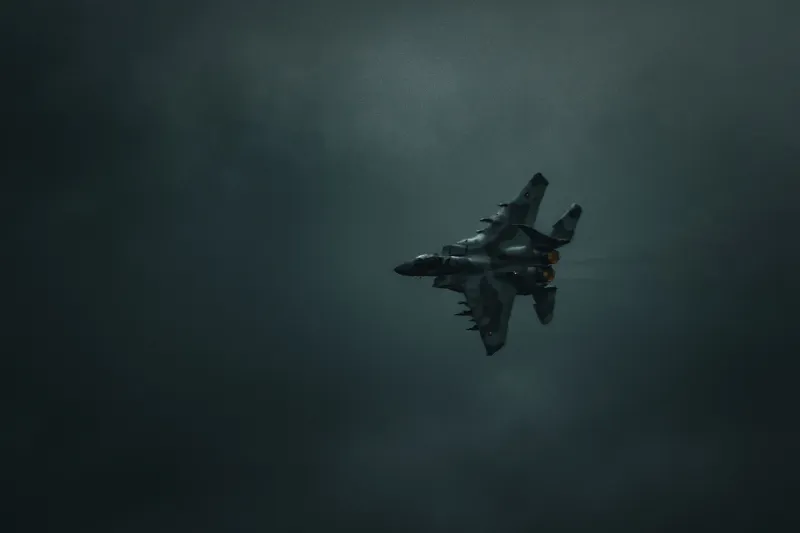
Defectors in the Cockpit: The Iraqi Airmen Who Flew in America's Shadow War
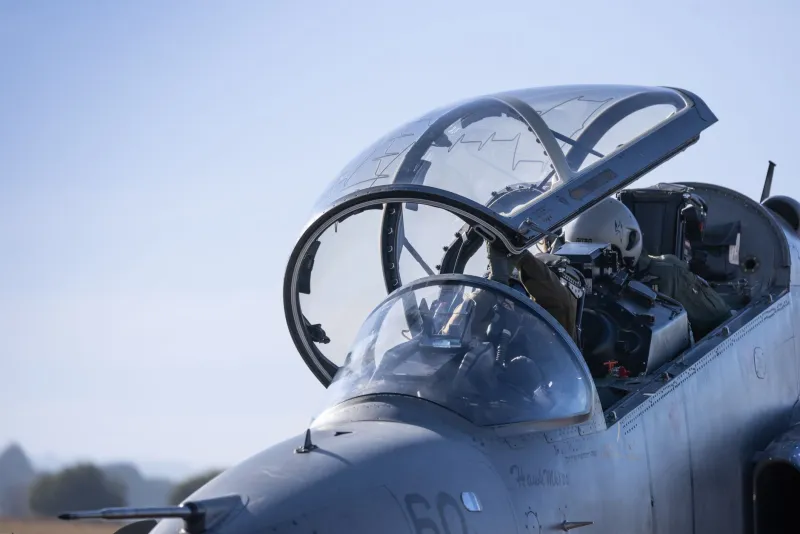
The roar of an F-16 over the Iraqi desert is a sound most Americans associate with American hands on the throttle. But during several chapters of the long air war over Iraq, some of the most critical intelligence guiding those missions came not from Langley or the Pentagon—it came from pilots who had once worn the uniform of Saddam Hussein's air force.
These men occupied an almost impossible position: trained by one military, hunted by another, and ultimately indispensable to the nation they had once faced across a gunsight.
A Force Born from Contradiction
The Iraqi Air Force, or Al-Quwwat al-Jawwiya al-Iraqiya, was for decades one of the most capable air arms in the Arab world. Soviet MiGs and French Mirages filled its hangars. Its pilots trained rigorously, often logging more flight hours than their counterparts in neighboring states. By the time the Gulf War erupted in 1991, the Iraqi Air Force represented a genuine, if ultimately overmatched, adversary.
Yet within that institution, fractures ran deep. Purges under Saddam Hussein had gutted the officer corps of experienced leadership. Pilots who questioned orders risked imprisonment—or worse. For some, the calculus of loyalty had quietly shifted long before the first American bombs fell on Baghdad.
When those bombs did fall, a significant number of Iraqi pilots made a choice that would define the rest of their lives: they flew their aircraft to Iran, to Jordan, or simply landed at airfields far from the front and waited. A smaller, lesser-known group made contact with American intelligence.
The Intelligence No Satellite Could Provide
Aerial reconnaissance can map a runway. It can count aircraft on a flight line. What it cannot do is explain how a particular squadron actually operates—its informal tactics, the quirks of its maintenance culture, the radio procedures its controllers use under combat stress.
That kind of knowledge lives inside a pilot's head.
U.S. Air Force and intelligence community personnel who worked with defecting Iraqi airmen during and after the Gulf War have described, in interviews conducted over the past two decades, the extraordinary granularity of what these individuals provided. One retired Air Force intelligence officer, speaking on background, recalled debriefings that lasted days—sessions in which a single Iraqi pilot's recollections helped analysts reconstruct the entire operational doctrine of a MiG-29 regiment.
"You could look at the aircraft from space all day long," he said. "But this man could tell you what the lead pilot ate for breakfast before a sortie and why that mattered to how he flew."
Beyond doctrine, defecting pilots provided insight into Iraqi air defense networks—the radar gaps, the command-and-control vulnerabilities, the human tendencies of the controllers who manned the surface-to-air missile batteries. Some of this intelligence directly informed the opening strikes of Desert Storm, guiding coalition aircraft through corridors that minimized exposure to Iraqi radar coverage.
Caught Between Flags
The personal stories of these airmen rarely reached the public. Classification, combined with genuine security concerns, ensured that most accounts remained buried in intelligence archives. But fragments have surfaced over the years, painting a portrait of men navigating extraordinary moral complexity.
One widely circulated account—confirmed in outline by multiple former intelligence officials—involves an Iraqi Air Force captain who made contact with American handlers through a third-country intermediary in the late 1980s, years before the Gulf War began. Over the course of several years, he provided assessments of Iraqi air combat readiness that proved remarkably accurate when coalition planners began developing Desert Storm targeting packages.
When the war started, this officer faced an agonizing choice. Remaining in Iraq meant certain exposure as the regime conducted loyalty screenings. Fleeing meant abandoning his family. He ultimately departed, was resettled in the United States under a program that has never been formally acknowledged, and lived out his years in deliberate obscurity in a mid-sized American city.
His story was not unique. Several Iraqi pilots who cooperated with U.S. intelligence were eventually resettled domestically, their identities protected, their contributions unrecognized in any public ceremony or official commendation.
The Second War and Its Complications
The 2003 invasion of Iraq introduced a new chapter in this quiet history. As American forces moved to dismantle the Iraqi military, they encountered a different kind of collaboration—not defection under a hostile regime, but the complex negotiation of loyalty in a collapsing state.
Former Iraqi Air Force officers were recruited to assist coalition air planners in understanding the physical and institutional infrastructure they had inherited. Some served as advisors during the reconstruction of what would eventually become the new Iraqi Air Force. Others provided assistance in locating hidden aircraft and munitions caches.
The dynamics were more fraught than they had been in 1991. These men were not defectors in the classical sense. They were survivors of a dissolved institution, navigating an occupation while attempting to protect themselves and their families. Their cooperation was real, but it existed within a web of competing pressures that American planners did not always fully appreciate.
What Became of Them
The postwar fates of Iraqi airmen who assisted U.S. operations varied enormously. Some successfully integrated into the new Iraqi Air Force, flying alongside American advisors in the years following the invasion. Others found themselves targets of insurgent violence, their past cooperation a death sentence in certain neighborhoods.
A number were resettled in the United States through Special Immigrant Visa programs or quiet administrative arrangements. Some thrived. Others struggled with the dislocation of exile, separated from culture, language, and the professional identity that had defined them.
The American military and intelligence community has been largely silent on these individuals' specific contributions. No unit citation commemorates the intelligence they provided. No memorial acknowledges the risk they accepted.
A Legacy Written in Classified Ink
The story of Iraqi pilots who collaborated with American forces is, at its core, a story about the human dimension of air warfare—the dimension that satellite imagery and mission reports cannot capture. These men possessed knowledge that shaped campaigns, saved lives, and influenced doctrine. They paid personal costs that few Americans will ever know.
For a site dedicated to the aerial history of this region, their story demands acknowledgment even when full disclosure remains impossible. The skies over Iraq were contested not only by aircraft but by the loyalties, fears, and courage of the people who flew them.
Some of those people flew for both sides. And in doing so, they altered the course of the conflict in ways that have never been properly credited.
Their silence, enforced by necessity, should not be mistaken for insignificance.