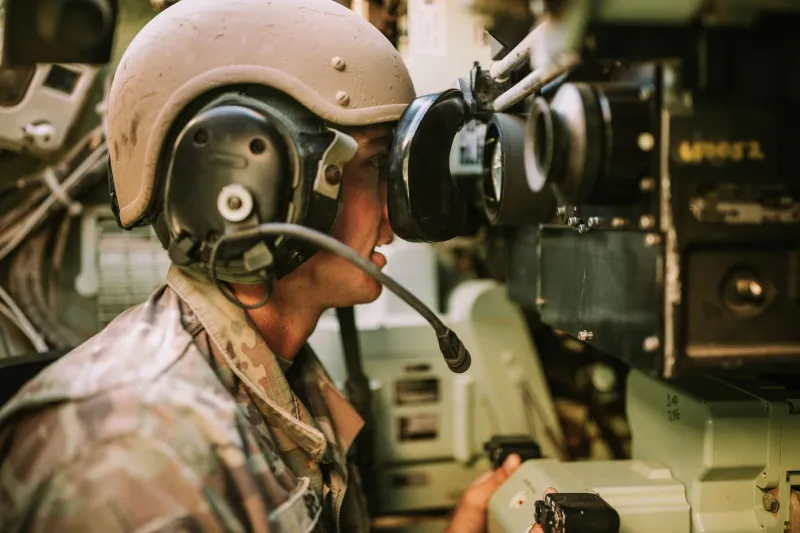
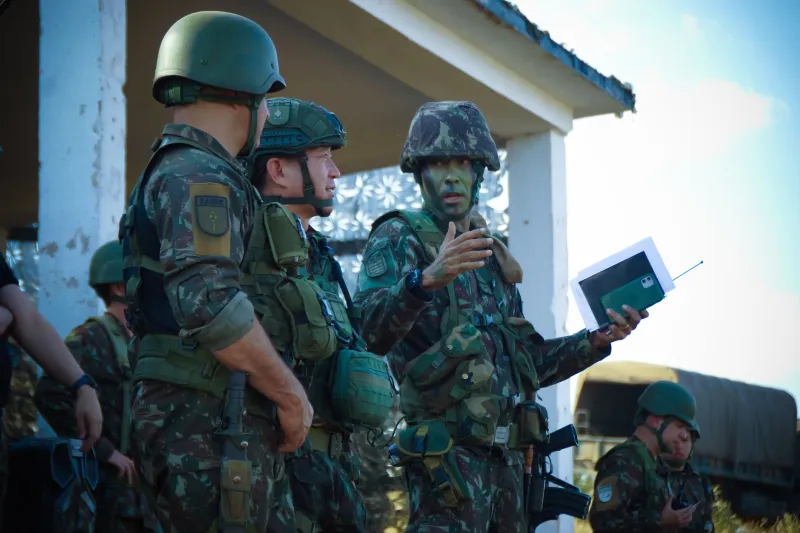
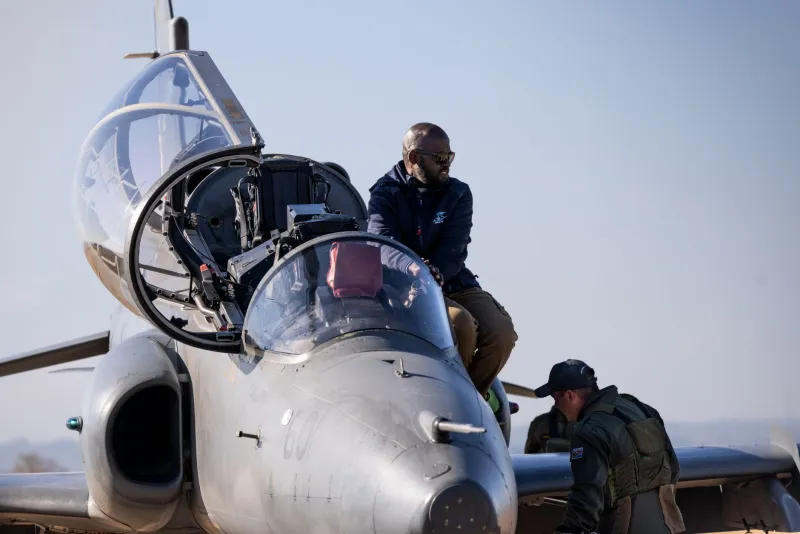
Conducting the Storm: The Air Traffic Controllers Who Kept Thousands of Warplanes From Killing Each Other
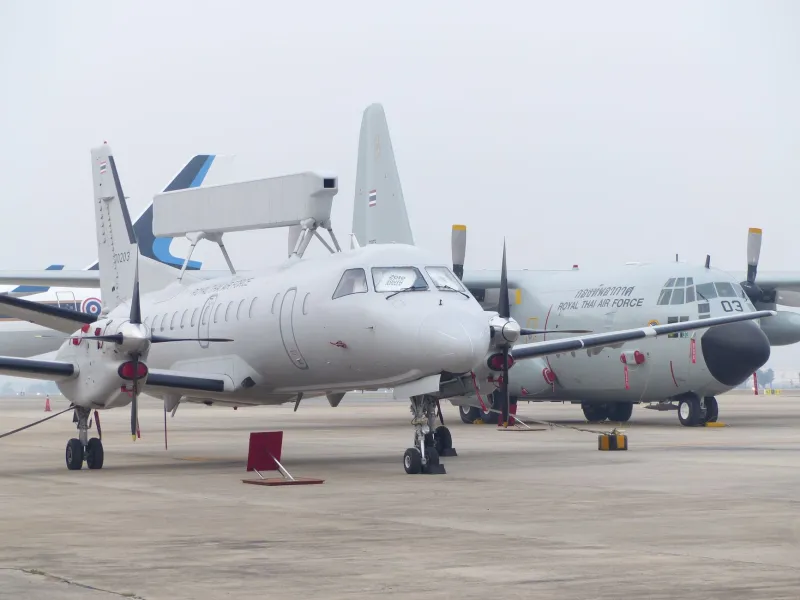
On any given day during the peak of Operation Iraqi Freedom, the airspace above Iraq resembled nothing so much as a metropolitan airport stacked six times over—except every aircraft was armed, every pilot was operating under combat stress, and the margin for error was effectively zero. Fighters queued for tankers. Bombers descended toward target coordinates while surveillance drones orbited at altitude. Cargo transports threaded through corridors that hours earlier had been live weapons engagement zones. Presiding over this organized chaos was a profession rarely celebrated in the annals of air combat history: the military air traffic controller.
They did not fly. They did not drop ordnance. But without them, the entire architecture of coalition airpower over Iraq would have collapsed into itself.
The Scope of the Problem
The numbers alone are staggering. During the opening weeks of Operation Iraqi Freedom in March and April 2003, coalition air forces flew upward of 800 to 1,000 sorties per day. By the time the occupation deepened into a sustained counterinsurgency campaign, that tempo fluctuated but never truly relented. Aircraft from the United States Air Force, Navy, Marine Corps, Army, and more than a dozen allied nations shared overlapping airspace with no civilian infrastructure to lean on—Iraq's own air traffic management system had been dismantled along with its military.
What replaced it was built almost from scratch, a layered system of airspace management that drew on lessons from Desert Storm, the Balkans campaigns, and Afghanistan, then pushed those lessons further than they had ever been tested. The Combined Air Operations Center, or CAOC, based initially at Prince Sultan Air Base in Saudi Arabia and later relocated to Al Udeid Air Base in Qatar, served as the nerve center. From there, the air tasking order—the daily blueprint governing every coalition flight—was distributed to units across the theater. But translating that document into real-time, collision-free flight operations required human beings at consoles, on radio frequencies, making decisions in seconds.
Voices in the Dark
Military air traffic controllers working Iraq operated across several distinct functional layers. Approach and departure controllers managed the immediate airspace around forward operating bases and main operating bases, some of which—like Balad Air Base, eventually designated Joint Base Balad—handled flight volumes comparable to a mid-sized American regional airport, except that the aircraft included everything from C-130 Hercules transports to F-16 Fighting Falcons returning from strike missions with nearly empty fuel states.
Above them, en route controllers managed the broader corridors threading through Iraqi airspace, deconflicting altitudes and routes for aircraft transiting between bases, tanker tracks, and target areas. And layered across all of it were the Airspace Control Authority functions that coordinated with ground commanders, special operations elements, and the intelligence community to ensure that a Predator drone loitering at 15,000 feet over Fallujah was not sharing that altitude with an F/A-18 Hornet descending for a close air support run.
The challenge was not merely technical. It was deeply human.
When the Plan Met Reality
The air tasking order, for all its meticulous construction, was a plan written hours in advance for a battlefield that changed by the minute. Ground commanders would call in urgent close air support requests that had not appeared on any pre-planned schedule. Weather would force aircraft to hold at altitude, compressing multiple formations into shrinking blocks of airspace. A tanker might go unserviceable mid-mission, leaving a string of thirsty fighters with no immediate alternative and controllers scrambling to redirect them toward a backup track.
Former controllers who served in Iraq have described the cognitive load as unlike anything they had trained for domestically. Civilian air traffic control in the United States, demanding as it is, operates within a framework of standardized procedures, predictable routing, and aircraft with known performance characteristics. Combat airspace introduced variables that no simulation fully replicated: aircraft declaring emergencies after taking ground fire, pilots disoriented by the featureless Iraqi terrain at night, and the ever-present reality that any delay in a clearance could mean a soldier on the ground waited longer for fires that could save his life.
Deconfliction was the constant obsession. Controllers maintained mental models of three-dimensional airspace in real time, tracking not just horizontal position but altitude blocks, fuel states, weapons status, and the boundaries of active ground engagements below. A single misheard callsign, a transposed altitude, or a hesitation on the radio could place two aircraft on converging paths with closure speeds measured in hundreds of knots.
Coalition Complexity
The multinational dimension of the coalition added a layer of friction that controllers navigated with considerable diplomatic finesse. Aircraft from the United Kingdom, Australia, Poland, and other allied nations brought their own communication procedures, phraseology conventions, and, in some cases, subtle differences in how altitude clearances were interpreted. English was the lingua franca of coalition airspace, but accent, idiom, and radio discipline varied enough that controllers learned to be explicit where American domestic practice might have relied on shared assumption.
Coordination between the CAOC and national air components also required controllers to be aware of political sensitivities governing where certain allied aircraft could operate and what missions they were authorized to support. The airspace was not merely a physical space to be managed—it was a reflection of the coalition's political architecture, and controllers worked within those constraints without the luxury of pausing operations to consult policy documents.
The Balad Benchmark
No single location better illustrated the scale of what military air traffic controllers accomplished than Balad Air Base, situated roughly 40 miles north of Baghdad. At its operational peak, Balad handled more than 300 aircraft movements per day, making it among the busiest military airfields in the world. The controllers there managed simultaneous operations involving medevac helicopters, cargo aircraft, fighter jets, and unmanned aerial vehicles—all operating in close proximity, often at night, and frequently under indirect fire from insurgent mortar and rocket attacks on the base perimeter.
That last detail bears emphasis. These controllers performed their duties in facilities that were themselves targets. The discipline required to maintain composure on a radio frequency while base alarms sounded and aircraft continued to fly is a dimension of the job that never appears in official statistics.
A Legacy Written in Frequency
The air traffic controllers of Operation Iraqi Freedom left no wreckage behind, which is precisely the point. Their success is measured in what did not happen: the mid-air collisions that never occurred, the formation conflicts resolved before they became emergencies, the thousands of sorties that departed and returned without incident across years of sustained combat operations.
History tends to remember the aircraft and the pilots who flew them. The voices in the headsets, the controllers bent over radar scopes in hardened facilities across the theater, rarely earn the same recognition. Yet the extraordinary safety record of coalition aviation over Iraq—in an airspace of unprecedented complexity and volume—stands as testament to their professionalism.
They conducted the storm. The music simply played so well that most people never noticed the conductor.