Grease, Grit, and Jet Fuel: The Aircraft Maintainers Who Held the Coalition Air War Together
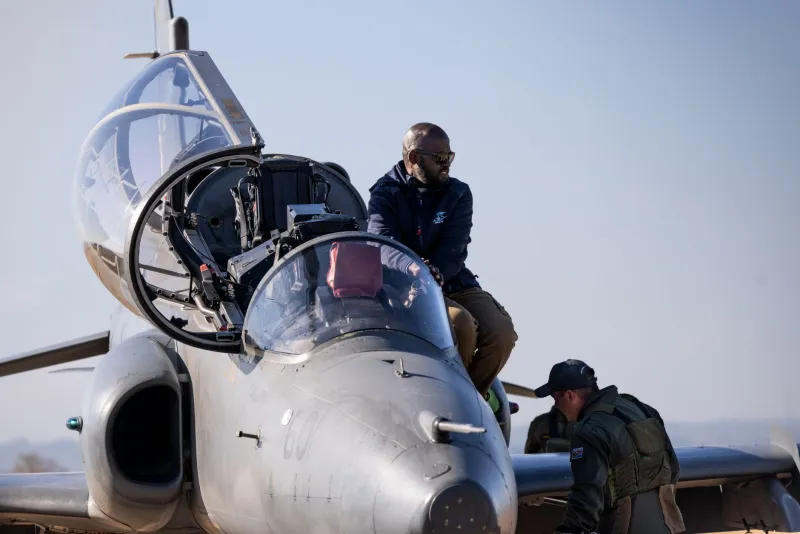
The pilot's name goes on the mission debrief. The crew chief's does not. That quiet asymmetry defined the Coalition air war over Iraq across three decades of sustained operations — from the opening strikes of Desert Storm in January 1991 through the grinding tempo of Operation Iraqi Freedom and the years of counterinsurgency patrols that followed. While historians have rightly documented the courage of aviators who flew into contested airspace, the maintenance specialists who kept those aircraft airworthy have remained largely invisible in the public record. Their battlefield was the flight line, and the enemy they fought arrived not with weapons, but with wind.
A Desert That Eats Machines
Iraq's geography is unforgiving to aviation equipment in ways that temperate climates simply are not. The country's western and southern regions are dominated by fine-grained silicate dust — particles so small they suspend in the air for hours after a storm and infiltrate every unsealed gap in an airframe. For jet engines, this presented a threat that bordered on existential. Turbine blades operating at extreme rotational speeds are precision instruments with tolerances measured in thousandths of an inch. Sand, drawn through an intake at several hundred miles per hour, acts as an abrasive that degrades compressor and turbine blade surfaces over time, reducing efficiency and accelerating the timeline toward catastrophic failure.
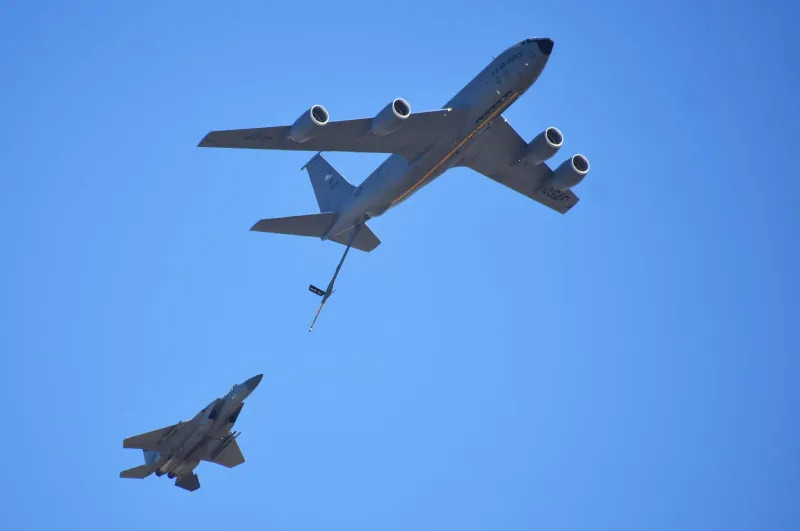
Maintainers working F-16s, F-15s, A-10s, and later F/A-18s and AV-8Bs developed informal inspection protocols that went well beyond published technical orders. Engine borescope inspections — internal visual checks using fiber-optic instruments — became near-daily rituals during periods of high dust activity. Crew chiefs learned to read the color and texture of compressor wash residue the way a physician reads a blood test, identifying abnormal wear patterns before they progressed to mission-critical failures.
Corrosion That Never Slept
Sand was only one dimension of the problem. Iraq's summer heat, which routinely pushed surface temperatures above 120 degrees Fahrenheit at bases like Ali Al Salem in Kuwait and Balad Air Base north of Baghdad, created a secondary threat through accelerated corrosion. Aircraft parked on ramps absorbed heat into their aluminum and composite structures throughout the day, then shed it rapidly after sunset. This thermal cycling expanded and contracted fastener holes, compromised sealants around access panels, and created micro-fractures in paint systems that allowed moisture — present in surprising quantities in Iraq's morning air — to reach bare metal beneath.
Corrosion control specialists found themselves fighting a war of attrition against oxidation on aircraft that, under normal depot maintenance cycles, might have gone years between comprehensive corrosion treatments. At forward operating locations, that luxury did not exist. Maintainers improvised, applying touch-up primer and corrosion-inhibiting compound under flashlights at two in the morning, their hands blistered from the previous day's heat still radiating from aluminum panels that had baked for ten hours in direct sun.
Innovation Born of Necessity
The ingenuity that emerged from these conditions was remarkable. At several bases throughout the Gulf region, maintenance units developed improvised engine inlet covers constructed from locally sourced materials when standard covers were delayed in supply chains stretched thin by the pace of operations. Hydraulic servicing crews modified standard ground support equipment to account for fluid viscosity changes caused by extreme heat, preventing the kind of actuator malfunctions that could ground an aircraft on the eve of a tasked mission.
One of the more consequential innovations involved the management of engine wash cycles. Conventional wisdom held that compressor washes — a process of running clean water through a running engine to remove salt and particulate contamination — should occur at fixed intervals. Desert conditions forced maintainers to abandon interval-based scheduling in favor of condition-based monitoring, washing engines when borescope inspections or performance trend data indicated degradation rather than waiting for a calendar date. This shift, adopted informally at the unit level years before it became doctrinal policy, measurably extended engine service life in high-dust environments.
The Human Cost of the Flight Line
The physical toll on maintenance personnel deserves direct acknowledgment. A crew chief assigned to an F-16 unit during the height of Iraqi Freedom operations might work a twelve-to-fourteen-hour shift in full sun, performing physically demanding tasks — torquing fasteners, pulling heavy access panels, climbing into wheel wells — in temperatures that made simple outdoor activity dangerous for the unacclimated. Heat casualties on flight lines were a genuine operational concern, and unit leadership spent considerable effort managing work-rest cycles to prevent the loss of irreplaceable skilled personnel to hyperthermia.
Beyond heat, the psychological weight of responsibility shaped the culture of aircraft maintenance in ways that outsiders rarely appreciate. A crew chief who signs off an aircraft as airworthy carries personal accountability for every system on that jet. When a pilot climbs in and flies into a combat environment, the specialist who certified that aircraft is aware, in a very concrete way, that any error in their work could cost a life. That awareness does not diminish with repetition. Experienced maintainers describe a discipline of methodical verification — checking what was just checked, confirming what was already confirmed — born not from distrust of their own competence but from respect for the stakes involved.
Sustaining Tempo Across Decades
What distinguished the Iraq air campaigns from many prior conflicts was duration. Desert Storm was a forty-three-day air war. Operation Southern Watch, the no-fly zone enforcement mission that followed, ran for twelve years. Iraqi Freedom and the subsequent advise-and-assist missions extended the American aerial presence across nearly two decades of continuous operations. Sustaining aircraft readiness across that kind of timeline required not just skilled individuals but institutional memory — the accumulated knowledge of how specific airframes behaved in specific conditions, passed from senior maintainers to junior ones through mentorship and shared experience.
That institutional knowledge rarely appears in official histories. It lives in unit continuity books, in the muscle memory of hands that have torqued the same fitting hundreds of times, and in the informal networks of experienced non-commissioned officers who knew which technical manual workarounds actually held up in desert conditions and which ones were theoretical constructs developed in air-conditioned laboratories far from the Kuwaiti flight line.
The Debt That Goes Unacknowledged
The aircraft that flew over Iraq — the Vipers, Eagles, Warthogs, Hornets, Bones, and all the rest — did not sustain themselves. Behind each sortie was a chain of labor that began hours before engine start and ended long after the jet returned to its parking spot, its maintenance log updated with the day's findings and the next day's work already planned. The pilots who flew those missions understood this better than anyone. Ask a combat aviator who they trusted most in a theater of war, and the answer will often surprise those outside the military community.
They trusted their crew chiefs.
The story of Coalition airpower over Iraq is, in the end, a story of partnership between those who flew and those who made flight possible. Honoring it fully means looking past the cockpit and down to the flight line, where the real work began long before the sun came up.