Thirty Years of Fire: How the F-16 Became Iraq's Most Feared Warplane
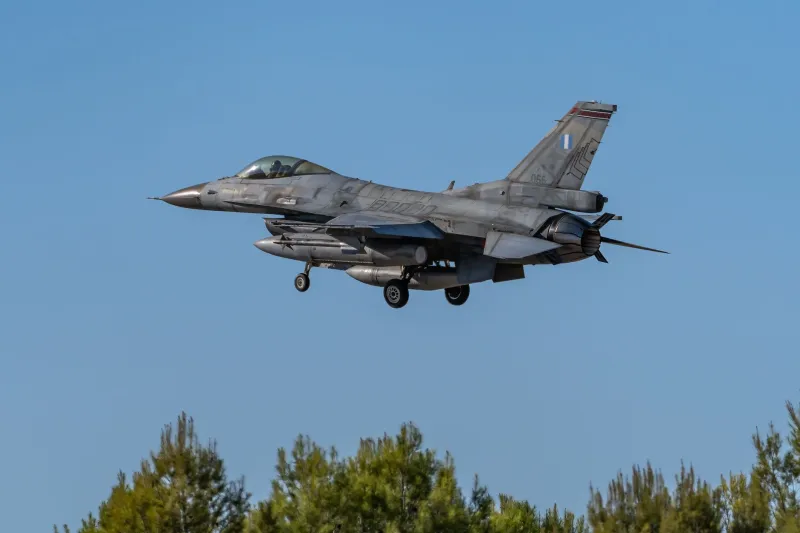
When Air Force Captain Jon "Shooter" Kelk fired the first air-to-air missile of Operation Desert Storm on January 17, 1991, he was strapped into an F-16C Block 32 — a jet that, by modern standards, was flying nearly blind. No helmet-mounted cueing system. No Link 16 data network. A radar that required pilots to divide their attention between a small scope and a sky full of threats. Yet Kelk's MiG kill, confirmed by gun camera footage, announced to the world that the Fighting Falcon was ready for high-intensity warfare.
What followed over the next three decades was one of the most remarkable technological metamorphoses in aviation history — a story not merely of upgraded hardware, but of a fundamental reimagining of what a single-engine, multirole fighter could accomplish.
Desert Storm: A Capable but Constrained Performer
During the forty-three-day air campaign of 1991, F-16s flew more sorties than any other coalition aircraft — approximately 13,500 in total, according to the Gulf War Air Power Survey. The numbers were impressive. The results, however, were mixed.
Early Block variants lacked the targeting pods necessary to deliver precision-guided munitions with reliability. Most F-16 strike packages still relied heavily on unguided Mk-82 general-purpose bombs, a delivery method that demanded low-altitude passes over targets that were, in many cases, saturated with Iraqi anti-aircraft artillery. The result was predictable: the F-16 sustained the highest combat loss rate among U.S. Air Force jets during Desert Storm, with six aircraft lost to enemy fire.
Veteran pilot Colonel David Eberly, who was shot down over western Iraq during the conflict, later recalled the fundamental tension of flying the early-model Falcon in a dense threat environment. "We were flying a very capable airplane," Eberly said in a 2004 interview with the Air Force Historical Research Agency. "But we were being asked to do things that the jet wasn't fully equipped to do yet. The platform had the bones — it just needed the tools."
Those tools were already in development.
The Decade Between Wars: Building the Precision Machine
The period between Desert Storm and Operation Iraqi Freedom in 2003 represented the most consequential upgrade cycle in the F-16's operational history. The introduction of the Low Altitude Navigation and Targeting Infrared for Night (LANTIRN) pod system in the mid-1990s fundamentally transformed the aircraft's strike capability, allowing pilots to identify, track, and engage targets with laser-guided bombs from altitudes that kept them safely above most anti-aircraft threats.
Operation Northern Watch and Operation Southern Watch — the twin no-fly zone enforcement missions that ran continuously from 1991 through 2003 — became the proving ground for these evolving capabilities. F-16s flew thousands of patrols over Iraqi airspace, occasionally exchanging fire with surface-to-air missile batteries and anti-aircraft artillery units that probed coalition resolve. Each engagement produced lessons that fed directly back into tactics, techniques, and procedures.
The Block 40 and Block 50 variants that emerged during this period were transformed aircraft. The Block 50, in particular, introduced the HARM Targeting System (HTS), converting the F-16 into a dedicated Suppression of Enemy Air Defenses (SEAD) platform capable of hunting and destroying Iraqi radar systems with AGM-88 High-speed Anti-Radiation Missiles. This was no longer the same jet that had struggled over Baghdad in 1991.
Cockpit architecture evolved in parallel. The transition from analog gauges to glass cockpit displays — and eventually to the wide-angle holographic Head-Up Display — reduced pilot workload dramatically, freeing cognitive bandwidth for tactical decision-making rather than instrument scanning.
Iraqi Freedom: The Falcon at Full Maturity
By March 2003, when coalition aircraft crossed into Iraqi airspace to begin Operation Iraqi Freedom, the F-16 had become a genuinely different weapon system. The introduction of the Sniper Advanced Targeting Pod gave pilots the ability to identify individual personnel from altitudes above 20,000 feet, enabling precision engagement that would have been inconceivable to Desert Storm aviators.
The integration of Joint Direct Attack Munitions (JDAM) — GPS-guided bombs capable of striking within meters of their intended targets regardless of weather conditions — eliminated the vulnerability that had cost the Air Force jets in 1991. Pilots could now release weapons from standoff distances, defeating Iraqi air defenses through geometry rather than speed.
Perhaps most significantly, the introduction of Link 16 datalink connectivity transformed the F-16 from an isolated platform into a networked node within a broader kill chain. Pilots could now receive real-time targeting data from airborne command and control aircraft, share tactical pictures with other fighters, and coordinate strikes with ground forces through a common operating picture that simply had not existed a decade earlier.
"The jet in 2003 was almost unrecognizable compared to what we flew in '91," said retired Lieutenant Colonel Marcus "Torch" Reyes, who flew F-16s in both conflicts. "Same airframe, same engine family — but the way you used it, the way you thought about it tactically, was completely different. You were part of a system, not just a single aircraft."
Tactics Shaped by Hard Experience
Beyond the hardware, the evolution of F-16 employment doctrine across Iraq's three major conflict phases reflects the adaptability that has defined American airpower. Desert Storm revealed the dangers of low-altitude operations against layered air defenses, prompting a doctrinal shift toward medium and high-altitude strike profiles. Operation Iraqi Freedom validated that shift while introducing new challenges: the threat environment had changed, but so had the requirement for discriminate, precise fires in an urban context.
The post-2003 counterinsurgency phase pushed F-16 crews into roles that no training syllabus had anticipated — hours-long overwatch missions supporting ground troops in contact, rapid-response strikes against time-sensitive targets, and the delicate calculus of employing precision weapons in densely populated environments. The jet adapted. So did its pilots.
A Legacy Still Being Written
The F-16's story over Iraq is, ultimately, a story about institutional learning — the ability of the U.S. Air Force to absorb the lessons of combat and translate them into capability improvements at a pace that consistently outpaced adversary adaptation. From the Mk-82 dumb bombs of 1991 to the laser-guided precision of 2003 and the networked overwatch missions of the counterinsurgency years, the Fighting Falcon served as both the instrument and the measure of American airpower's evolution.
The aircraft that first flew over Iraq in 1991 and the one that last flew combat missions there a generation later shared a fuselage and a name. In nearly every other meaningful sense, they were different machines — products of an iterative, experience-driven process that remains one of the most instructive case studies in modern military aviation history.