From Adversaries to Advisors: The Iraqi Aviators Who Quietly Reshaped American Air Power Doctrine
In the months following the collapse of Saddam Hussein's regime, American intelligence officers and military planners faced an unusual problem. They had decisively defeated one of the Arab world's most sophisticated air forces, yet they understood surprisingly little about how that force had actually thought, trained, and operated from the inside. Classified assessments could map radar frequencies and aircraft specifications, but they could not fully explain the doctrinal logic — the inherited Soviet frameworks, the improvised Middle Eastern adaptations — that had shaped Iraqi aviators for decades.
The solution arrived from an unexpected direction: the men who had flown those aircraft.
A Knowledge Gap No Satellite Could Fill
By the early 2000s, American air power had demonstrated an overwhelming technological advantage over Iraqi forces. Yet within the intelligence community and at air combat training centers across the United States, analysts quietly acknowledged that raw capability data told only part of the story. Understanding how an adversary pilot thinks — how he reacts under pressure, how he interprets orders, how his training conditions his instincts — requires something that no reconnaissance platform can capture.
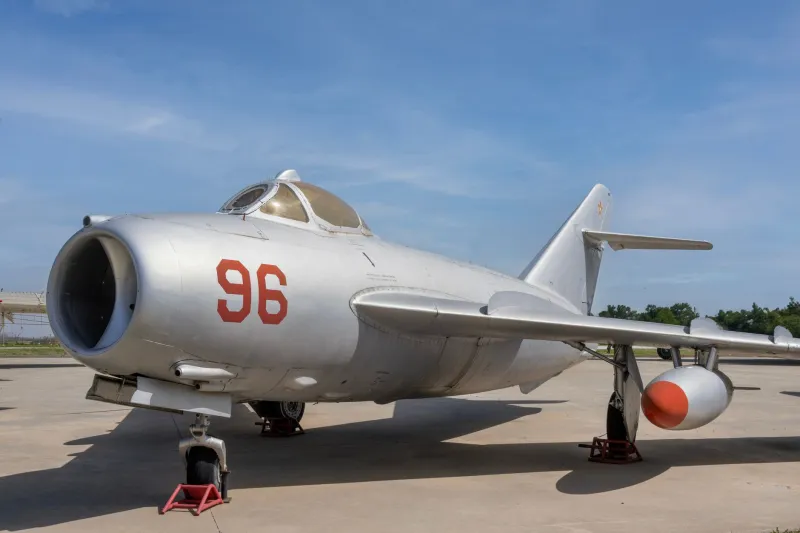
Former Iraqi Air Force officers, many of whom had accumulated thousands of flight hours in MiG-21s, MiG-23s, MiG-25s, and Mirage F1s, possessed precisely that knowledge. Some had trained in the Soviet Union during the 1970s and 1980s. Others had participated in the Iran-Iraq War, accumulating combat experience that made them genuinely rare figures in the global aviation community. A number had been present during Desert Storm, surviving the systematic dismantling of their service by coalition air power.
After 2003, several of these men entered into formal and informal advisory arrangements with U.S. military and intelligence organizations. The precise contours of these relationships remain only partially documented in open sources, but their broad outlines have emerged through declassified materials, academic research, and the accounts of American officers who worked alongside them.
The Soviet Inheritance
One of the most significant contributions these advisors made was helping American planners understand the Soviet doctrinal framework that had been transplanted into the Iraqi Air Force. Soviet air combat doctrine was fundamentally different from the American approach. Where U.S. pilots were trained to exercise individual judgment and exploit situational awareness, Soviet-trained aviators operated within a tightly controlled ground-directed system. Initiative was subordinated to centralized command. Tactical flexibility was constrained by rigid procedural frameworks.
For American instructors at aggressor training units — the squadrons tasked with simulating enemy air forces for U.S. pilots — this distinction was operationally critical. Former Iraqi officers could explain not merely how Soviet aircraft performed on paper, but how pilots trained within that system actually flew them. They could describe the specific habits, the conditioned responses, the moments of hesitation or predictability that emerged from years of Soviet-influenced instruction.
This kind of granular, experiential knowledge had direct training value. American fighter pilots preparing for potential future conflicts with adversaries operating Soviet-derived aircraft and doctrine received a more authentic simulation because of it.
Navigating the Intelligence Pipeline
The integration of former adversary officers into American advisory roles was not a casual arrangement. It involved careful vetting, sustained oversight, and the navigation of significant legal and bureaucratic frameworks. The intelligence community had long experience running source relationships with foreign military personnel, but the post-2003 Iraqi context presented its own complications.
Trust had to be established incrementally. American handlers needed to verify not only that advisors were sharing accurate information, but that their cooperation was genuine rather than an attempt to mislead. Former Iraqi officers, for their part, were navigating a profoundly disorienting transition — from serving a totalitarian state's military apparatus to assisting the foreign power that had dismantled it.
Those who made that transition successfully often did so because of personal as well as professional motivations. Some had harbored deep resentments toward the Ba'athist regime that had politicized their service, purged officers arbitrarily, and ultimately led their country into catastrophic military defeat. For these men, cooperation with American authorities represented a form of professional redemption as much as pragmatic calculation.
Shaping Doctrine Beyond the Classroom
The influence of Iraqi aviation advisors extended beyond direct training applications. Their insights fed into broader analytical projects examining how Middle Eastern air forces had absorbed and adapted Soviet doctrine over several decades. This research had implications for American understanding of other regional air forces operating similar equipment and drawing on comparable training traditions.
At institutions such as the Air Force Research Laboratory and various defense contractor analytic centers, former Iraqi officers contributed to studies examining electronic warfare vulnerabilities, ground-controlled intercept procedures, and the tactical habits embedded in Soviet-influenced pilot training. These contributions were rarely attributed publicly — the nature of such advisory relationships typically precludes open acknowledgment — but their fingerprints can be detected in the evolution of American air combat training curricula during the mid-2000s.
Some former Iraqi aviators also contributed to efforts to rebuild an Iraqi Air Force under the new government, serving as institutional bridges between the old service's accumulated expertise and the new organization's requirements. This role was inherently complicated, requiring them to help construct something genuinely different from what they had known while drawing on the professional knowledge they had developed within the previous system.
The Weight of What They Carried
It would be a distortion to romanticize these arrangements or to present former Iraqi officers as uncomplicated heroes of some post-war reconciliation narrative. Their careers had been conducted in service of a regime responsible for grave crimes. Some had participated in operations — against Kurdish populations, against Iranian targets — that remain deeply controversial. American officers working alongside them were not naive about this history.
What made the advisory relationships function, when they did, was a shared professional language. Aviation is a discipline that creates its own community across national and political boundaries. The technical vocabulary, the shared understanding of what it means to push an aircraft to its limits, the mutual respect that emerges from recognizing genuine expertise — these created a basis for productive engagement that transcended the fraught political context.
An Unwritten Chapter
The full history of how former Iraqi Air Force officers contributed to American military knowledge remains largely unwritten. Classification constraints, the sensitivity of ongoing intelligence relationships, and the complexity of the human stories involved have kept much of this chapter out of the public record.
What can be said with confidence is that American air power doctrine did not emerge from the Iraq conflicts unchanged, and that the men who had flown against American aircraft — or simply survived the destruction of their service — played a more significant role in shaping what came next than is generally recognized. In the long history of aerial competition over Iraq, that quiet exchange of knowledge across former battle lines may represent one of the most consequential, and least celebrated, outcomes of the entire era.