Margin of Error: Five Moments When Iraq's Defenses Nearly Rewrote the Gulf War
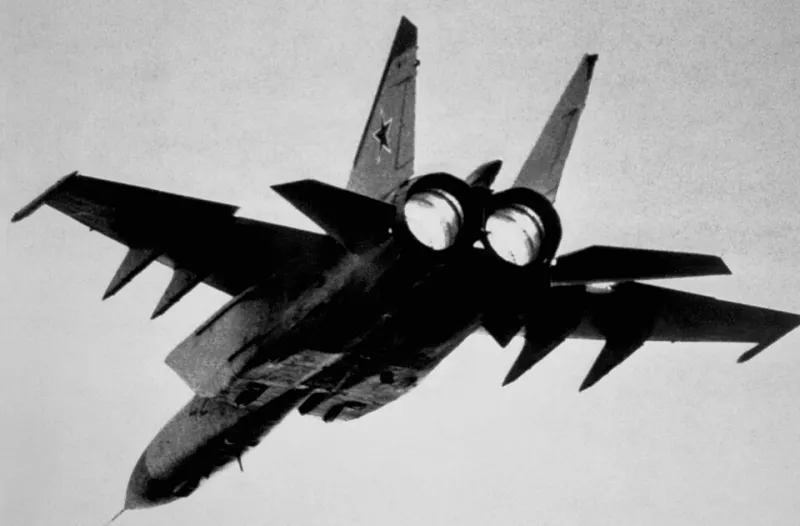
Photo: Department of Defense. American Forces Information Service. Defense Visual Information Center. 1994, Public domain, via Wikimedia Commons
The War That Almost Wasn't a Blowout
American popular memory holds that Desert Storm was a bloodless technical demonstration. The declassified record tells a more anxious story. Coalition planners operated under real fear of losses that could shatter domestic support — the ghost of Vietnam hung over every strike package. Iraq's defenses, whatever their eventual collapse, came close enough to that threshold on several occasions to merit a harder look.
1. The MiG-25 That Killed a Hornet
On the first night of the war, an Iraqi Air Force MiG-25PD pilot, Zuhair Dawood, closed on a U.S. Navy F/A-18 flown by Lieutenant Commander Scott Speicher and fired a missile that ended the Navy's worst fears in a single flash. It was the coalition's first combat loss of the campaign. Had Foxbats achieved even two or three such intercepts in the opening week, the narrative of untouchable American air power — the story that defined the entire conflict — might never have taken hold.
2. The SAM Trap at H-3
The hardened airfield complex at H-3 in western Iraq was among the densest air defense environments coalition aircrews faced. Multiple packages drew heavy, accurate fire there, and several accounts describe missiles that maneuvered within lethal parameters of strike aircraft. A mass casualty event at H-3 — a single transport or strike flight caught in the open — would have forced a pause and a strategic debate Washington was not prepared to have.
3. Hunting the Invisible
Iraqi integration sections, using older radars and human spotters, repeatedly claimed track data on F-117s. Most assessments dismiss these as wishful reporting, but coalition electronic warfare officers took some of the warnings seriously enough to alter routing. One confirmed loss of a stealth aircraft, however lucky, would have handed Baghdad a propaganda weapon and Congress a hearing.
4. The AAA Wall Over Kuwait City
Anti-aircraft artillery over the Kuwaiti theater was less sophisticated than the SAM belt but far denser. Low-altitude attacks by A-10s and Navy aircraft produced some of the war's most harrowing damage reports — aircraft returning with dozens of holes. Heavier losses in this environment were statistically plausible and would have complicated the political messaging around precision war.
5. The Scud Diversion
Perhaps no Iraqi weapon came closer to reshaping the campaign than the Scud. Missile strikes on Israel and Saudi Arabia pulled hundreds of sorties away from the air superiority fight, nearly drew a belligerent Israel into the coalition, and exposed the limits of Patriot defense. Had a Scud struck a crowded facility with mass casualties, the war's political architecture might have fractured from within.
Reading the Threads
None of these moments changed the outcome. Together, they demonstrate how narrow the gap actually was between a historic victory and a contested, politically fragile air campaign — and why American planners studied Iraqi resistance long after Baghdad's forces stopped flying.