Terrain Without Mercy: How Iraq's Ecological Collapse Became the Most Persistent Threat in Its Skies
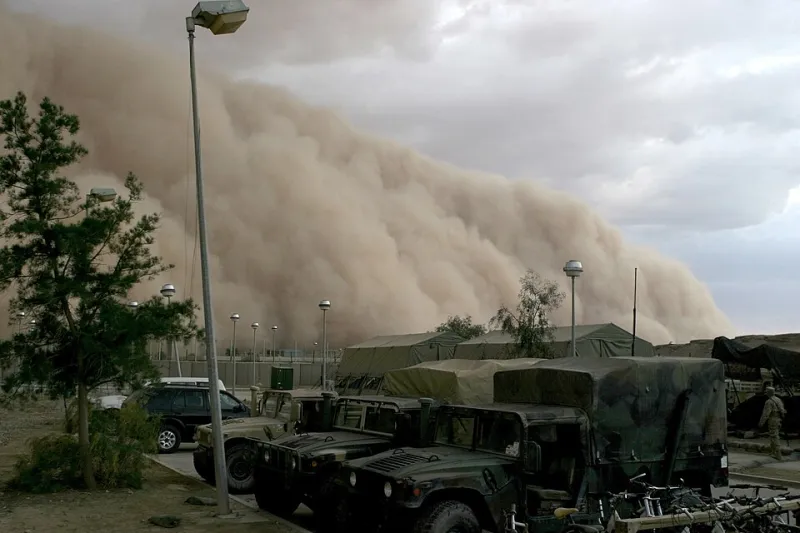
Photo: Arya Barznji M. Baghdad, Iraqi National Republian Guard Corps., Public domain, via Wikimedia Commons
Sand, corrosion, and contaminated infrastructure killed more missions than enemy fire ever did. A forensic examination of declassified maintenance records and firsthand pilot accounts reveals that Iraq's deteriorating environment waged a slow, relentless campaign against both Coalition and Iraqi aviation—one that shaped operational outcomes in ways that conventional military analysis has consistently underestimated. The story of airpower over Iraq is, in substantial measure, the story of machines and the people who maintained them fighting a war on two fronts simultaneously—one against an armed adversary, and one against the land itself.
A Landscape Engineered for Attrition
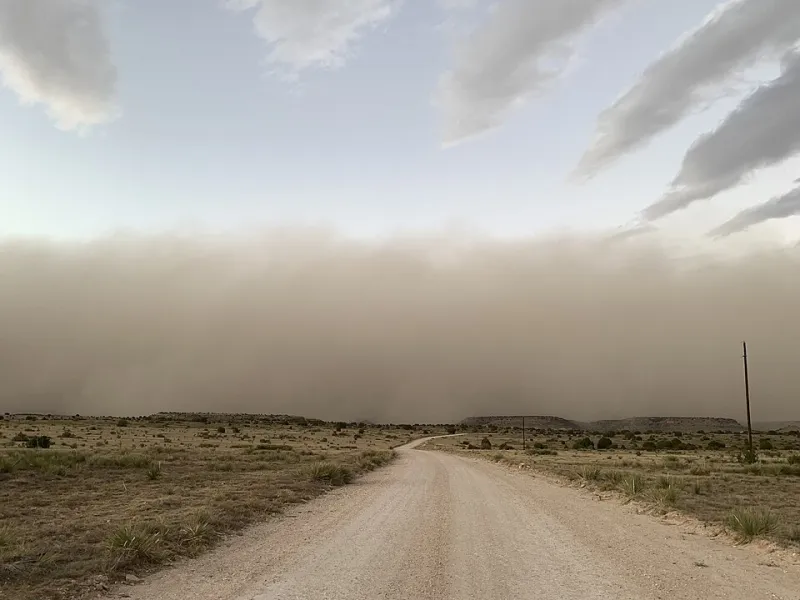
Iraq's geography has never been hospitable to the mechanical precision that aviation demands. The Mesopotamian basin, ancient and geologically restless, generates environmental conditions that treat aircraft components as consumables rather than durables. Fine-particle dust—silica-laden and electrostatically charged—penetrates engine compressor stages, abrading turbine blades with a consistency that no maintenance schedule can fully counteract. The country's seasonal haboobs, walls of suspended particulate matter that can reduce visibility to zero in minutes, are well-documented in meteorological literature. Less examined is the cumulative mechanical toll that repeated dust exposure inflicts on aircraft systems designed and tested in the comparatively benign environments of American and Western European manufacturing facilities.
Declassified maintenance logs from Coalition air bases in Kuwait and Qatar, released under Freedom of Information Act requests filed by defense researchers between 2009 and 2016, paint a picture of chronic attrition that the official operational narrative rarely acknowledged. Engine inspections that would normally occur at prescribed flight-hour intervals were being triggered at significantly shorter cycles. Hydraulic seals were failing ahead of schedule. Avionics cooling systems, designed for temperate operating environments, were working at or beyond their thermal limits in the Iraqi summer, where ground temperatures routinely exceeded 120 degrees Fahrenheit.
The Airfield Problem
The condition of Iraq's own airfield infrastructure added a separate dimension to the environmental challenge. Decades of sanctions, followed by the physical damage inflicted during Operation Desert Storm and the subsequent no-fly zone enforcement period, had left Iraqi airfields in varying states of degradation. When Coalition forces seized and began operating from these facilities in 2003, they inherited infrastructure that had been maintained under conditions of extreme resource scarcity.
Fuel storage systems were contaminated. Drainage networks had collapsed, creating standing water that accelerated concrete deterioration and introduced moisture into underground utility conduits. Several airfields had been subjected to improvised repairs using materials that did not meet aviation-grade specifications, producing runway surfaces with embedded irregularities capable of throwing foreign object debris into aircraft engines during takeoff and landing rolls.
A 2004 internal assessment by the Air Force Civil Engineer Center, portions of which were later declassified, identified foreign object damage—FOD—as a significant contributing factor in a number of aircraft maintenance incidents at formerly Iraqi-operated airfields during the early occupation period. The report noted that the scale of the contamination problem exceeded initial estimates and that remediation efforts were constrained by competing operational priorities and limited engineering resources.
Corrosion as a Strategic Variable
Beyond the immediate hazards of dust and debris, Iraq's environment presented a longer-arc threat in the form of accelerated corrosion. The combination of high humidity in river valley regions, salt-laden air in areas proximate to the Persian Gulf, and the chemical residues left by decades of industrial activity and military operations created a corrosive atmosphere that attacked aluminum airframes, electrical wiring bundles, and structural fasteners with unusual aggression.
This was not, strictly speaking, a new problem. The U.S. military had documented corrosion challenges in Gulf region deployments as far back as Operation Desert Shield in 1990. What changed after 2003 was the duration of exposure. Sustained operations over multiple years, rather than a discrete combat deployment, meant that aircraft were subjected to the Iraqi environment for periods far exceeding the assumptions built into their original corrosion protection designs.
Maintenance crews—many of them National Guard and Reserve component personnel with less familiarity with high-tempo operational environments—found themselves managing corrosion problems that outpaced their training and their supply chains. Specialty coatings and sealants were in short supply. Inspection intervals designed for stateside conditions proved inadequate for the Iraqi operating environment. Aircraft that were technically airworthy by the letter of their maintenance documentation were, in some cases, carrying structural degradation that would not manifest as a safety issue until significantly later in their service lives.
The Iraqi Air Force's Inherited Burden
For the reconstituted Iraqi Air Force, the environmental challenge was compounded by institutional factors that made it nearly impossible to address the underlying problems systematically. A force being built from scratch, with an international patchwork of training programs and a maintenance culture still in formation, was poorly positioned to manage the sophisticated corrosion and contamination issues that its operating environment demanded.
Former Iraqi Air Force technical officers interviewed for this article described a persistent cycle in which aircraft would be returned to service following maintenance actions that addressed the presenting symptom without resolving the underlying environmental cause. Filters would be cleaned; dust would return. Seals would be replaced; the conditions producing accelerated seal failure would remain unchanged. The result was a maintenance burden that consumed resources and personnel time at a rate that consistently exceeded what the young force could sustain.
"The environment does not negotiate," said one former Iraqi Air Force maintenance officer, now working for a regional aviation training organization. "It does not respect your schedule or your budget. It simply continues. And if you do not have the resources to match its pace, it wins."
Ecological Warfare by Accident—or Design?
Some analysts have raised the question of whether Iraq's environmental degradation—particularly the expansion of desert terrain resulting from the deliberate draining of the southern marshes under Saddam Hussein and the broader ecological damage of decades of conflict—constituted a form of unintentional ecological warfare that ultimately rebounded against whoever was operating in Iraqi airspace, regardless of allegiance.
The hypothesis is difficult to prove and easy to overstate. But the underlying observation is sound: the environmental conditions that Coalition forces encountered in Iraq were not simply a natural backdrop to operations. They were, in part, the product of deliberate human choices that had reshaped the land over generations. The dust that abraded turbine blades and the contamination that fouled fuel systems were not random misfortunes. They were the accumulated consequences of a landscape that had been systematically degraded, and they fell with equal indifference on every aircraft that entered Iraqi airspace.
In that sense, the environment was perhaps the most democratic combatant in the entire conflict—the one adversary that neither side could neutralize, negotiate with, or ultimately defeat.