Bone Deep: How the B-1B Lancer Redefined Precision Bombing in the Dead of Night
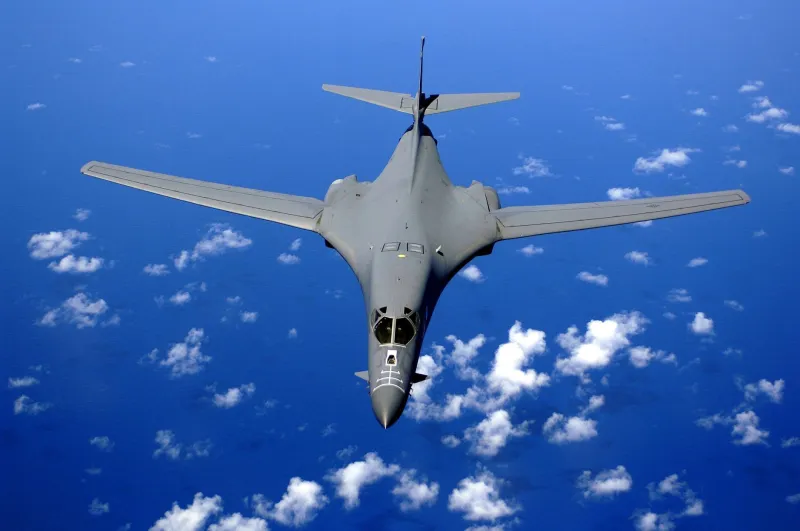
The B-1B Lancer — known to its crews simply as "the Bone" — arrived over Iraq carrying a reputation forged in Cold War deterrence. What it left behind was something far more consequential: a blueprint for the precision night strike that would define American air power for a generation. This is the story of how a supersonic bomber built to deliver nuclear payloads learned to thread a needle at 30,000 feet in total darkness.
From Nuclear Deterrent to Conventional Workhorse
When Rockwell International first rolled out the B-1B in the mid-1980s, its mission profile was unambiguous: penetrate Soviet air defenses at low altitude and high speed, delivering nuclear ordnance before the enemy's radar operators could react. The aircraft was a marvel of variable-sweep wing engineering, capable of reconfiguring its aerodynamic profile mid-flight to optimize for speed or range as conditions demanded.
Then the Cold War ended, and the Bone found itself without a primary purpose.
The Air Force's response was the Conventional Mission Upgrade Program, a phased series of modifications that stripped the aircraft of its nuclear delivery role and rebuilt it from the inside out as a precision conventional strike platform. By the time Operation Iraqi Freedom commenced in March 2003, the B-1B had been equipped with the Joint Direct Attack Munition — the GPS-guided JDAM — and was cleared to carry up to 24 of the 2,000-pound weapons simultaneously. No other aircraft in the American inventory could match that payload in a single sortie.
But raw tonnage was never the Bone's most important contribution over Iraq. It was timing, persistence, and the ability to operate with lethal accuracy in conditions that grounded lesser aircraft.
The Targeting Revolution
Central to the B-1B's transformation was the integration of the Sniper Advanced Targeting Pod, a long-range electro-optical and infrared sensor system that gave weapons officers — the WSOs seated behind the two pilots — an almost surgical view of the battlefield below. In the pitch-black Iraqi night, the Sniper pod could distinguish individual figures moving through an urban alleyway from altitudes that placed the aircraft well beyond the reach of conventional anti-aircraft fire.
Former WSO Major Daniel Hartley, who flew multiple combat rotations over Iraq between 2004 and 2007, described the experience in terms that underscore just how dramatically the technology had shifted the calculus of aerial warfare.
"You're essentially sitting in the dark, looking at a television screen, and what you're seeing is a level of detail that would have been inconceivable to a bomber crew twenty years earlier," Hartley recalled in a 2019 interview with aviation historians at the Air Force Historical Research Agency. "We could track a vehicle from the moment it left a compound, follow it for sixty miles, and deliver a weapon within a meter of the designated point — all without the crew on the ground ever knowing we were overhead."
That persistent overhead presence — what Air Force planners referred to as "time on station" — became one of the Bone's most strategically valuable attributes. Operating from bases in the United Kingdom, Diego Garcia, and eventually Qatar, B-1B crews flew missions that regularly exceeded fourteen hours. Where a tactical fighter might loiter over a target area for thirty minutes before bingo fuel forced a return to base, the Lancer could remain on station for hours, waiting for the precise moment when a strike would achieve maximum effect.
Evasion, Suppression, and Survivability
The B-1B's low-observable characteristics — the result of blended fuselage shaping, radar-absorbent materials, and a reduced radar cross-section compared to earlier heavy bombers — were never intended to render the aircraft invisible. Rather, they were designed to complicate the targeting solutions of enemy air defense operators long enough for the aircraft to complete its mission and exit the threat envelope.
Over Iraq, particularly during the early phases of Operation Iraqi Freedom when residual elements of the Iraqi Integrated Air Defense System remained partially functional, this characteristic proved operationally significant. Declassified mission summaries reviewed by Wings Over Iraq indicate that B-1B strike packages operating in the western and northern sectors of Iraq were tracked intermittently by ground-based radar systems but rarely achieved a weapons-quality lock — a testament to both the aircraft's design and the effectiveness of accompanying electronic warfare support.
"The Iraqis knew we were up there in a general sense," noted one former offensive systems officer, speaking on background. "What they couldn't do was build a firing solution. And in that gap between detection and engagement is where the Bone lived."
Time-Sensitive Targeting and the Human Equation
Perhaps the most consequential operational innovation associated with the B-1B in Iraq was its role in time-sensitive targeting — the rapid prosecution of fleeting, high-value targets that emerged and disappeared within minutes. As the conflict transitioned from conventional combat operations to counterinsurgency, the ability to respond to a developing situation on the ground with precision air power in under three minutes became a tactical priority.
The Bone's combination of payload capacity, loiter time, and precision guidance made it the platform of choice for this mission set. Crews developed an intimate working relationship with joint terminal attack controllers on the ground, refining communication protocols and target confirmation procedures that allowed them to place ordnance within meters of friendly positions without endangering the troops they were supporting.
This was not without its moral and psychological weight. WSOs who flew these missions frequently describe the experience of watching a strike unfold through the targeting pod — in real time, from miles above — as something that resists easy categorization. The clinical precision of the technology existed in constant tension with the human reality visible on the screen below.
A Legacy Written in Coordinates
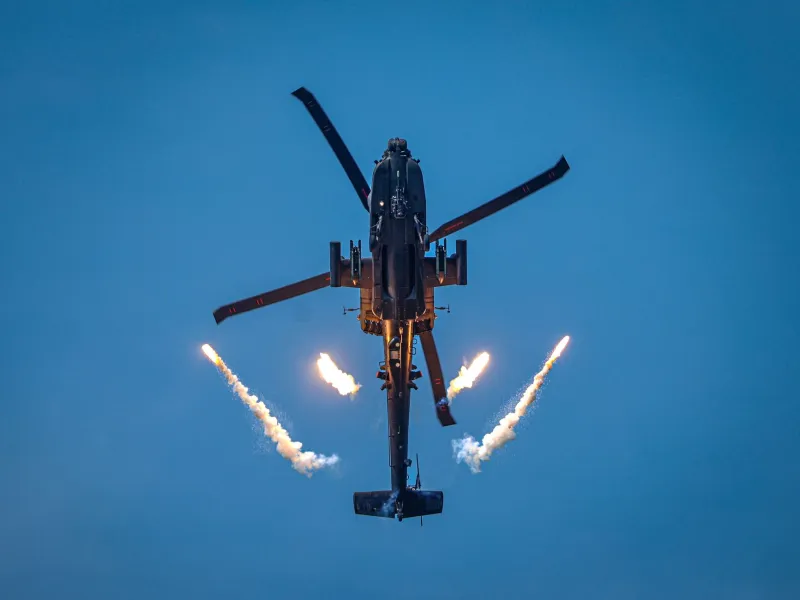
The B-1B's contributions to aerial operations over Iraq have not always received the recognition afforded to more visually dramatic platforms. The stealthy F-117 Nighthawk and the carrier-based F/A-18 generated more headlines; the Apache gunship dominated the imagery of ground combat. But among the communities of airmen who planned and executed the air campaign, the Bone occupies a singular place.
Declassified records from Air Force Global Strike Command indicate that B-1B crews flew thousands of combat sorties over Iraq across the span of the conflict, delivering a substantial fraction of the precision-guided munitions expended in support of ground operations. The aircraft's sortie generation rate, its payload flexibility, and its ability to integrate with evolving ground force requirements made it an indispensable component of the joint air-ground team.
The lessons absorbed over Iraq — about persistence, precision, and the human dimension of high-technology warfare — continue to shape how the Air Force thinks about long-range strike operations today. The Bone is still flying, still evolving, and still carrying the institutional memory of those long nights over the Iraqi desert into whatever comes next.