Built to Defend, Repurposed to Threaten: How ISIS Turned Coalition-Era Airfields Against Their Builders
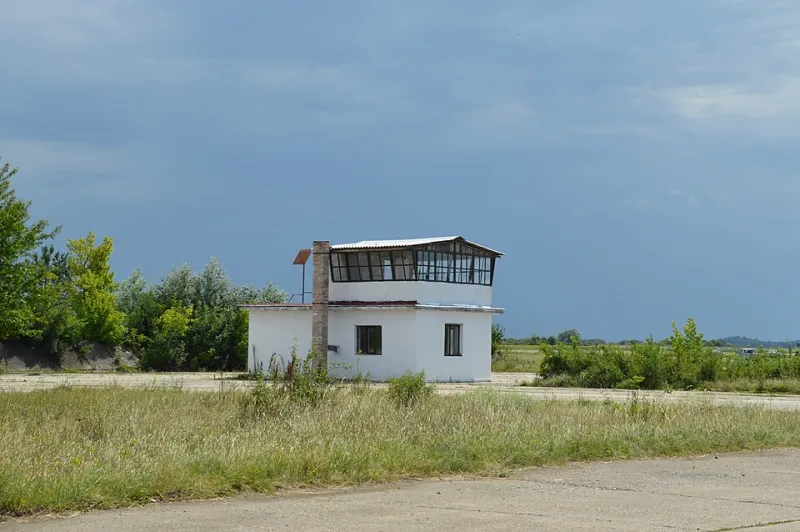
Photo: VargaA, CC BY-SA 4.0, via Wikimedia Commons
There is a particular kind of military irony that arrives not with a bang but with a satellite image. Sometime in the summer of 2014, American intelligence analysts reviewing overhead imagery of Tikrit Air Academy noticed something that required a second look. The runways were being cleared. Equipment was being repositioned. The base—once a centerpiece of Saddam Hussein's air power ambitions and later a coalition reconstruction project—was showing signs of deliberate, organized activity under the flag of the Islamic State.
The United States had spent years and considerable treasure building, rebuilding, and reinforcing Iraqi air infrastructure. Now those same installations were presenting a new kind of problem.
The Infrastructure Left Behind
To understand how this happened, it is necessary to appreciate what Iraq's air base network actually represented at the moment of the 2011 U.S. withdrawal. These were not improvised strips of packed earth. Facilities like Balad Air Base, Kirkuk Regional Air Base, and the sprawling complex at Tikrit had been engineered over decades—first by Soviet and French contractors during the Baathist era, then upgraded incrementally by coalition forces after 2003.
Hardened aircraft shelters, reinforced fuel storage systems, dispersed ammunition bunkers, and sophisticated drainage infrastructure designed to survive sandstorms were all part of the legacy. The Iraqi Air Force that the coalition was training to inherit these facilities was, by 2014, still fragile. When ISIS launched its June offensive, entire units dissolved. Bases were abandoned in hours, sometimes less.
What ISIS acquired was not merely real estate. It was a network of engineered military infrastructure distributed across strategic terrain, much of it already oriented toward air operations.
What Extremists Can Do With a Runway
The question coalition planners confronted in the weeks following the fall of Mosul was pointed: what could an organization like ISIS actually accomplish with access to former military airfields?
The short answer, as assessed by U.S. Air Force and intelligence officials at the time, was limited but non-trivial. ISIS lacked trained pilots in any meaningful number and had no access to functional fixed-wing combat aircraft. However, the organization demonstrated interest in several ancillary capabilities that airfield infrastructure could support. Hardened shelters provided protected storage for vehicle-borne explosives and weapons caches. Runway surfaces offered staging areas for large vehicle convoys that needed flat, compacted ground. Communication infrastructure embedded in former base facilities—some of it never fully stripped—offered potential signals advantages.
Perhaps most consequentially, the symbolic and psychological value of controlling recognizable military installations was not lost on ISIS media operations. Images of fighters occupying former coalition-associated bases carried propaganda weight that the organization actively exploited.
The Decision to Strike What Was Once Protected
For coalition air planners, the targeting calculus was genuinely uncomfortable. Facilities that American and allied engineers had invested in, that U.S. advisors had walked through with Iraqi counterparts, that appeared in briefing slides as symbols of the reconstruction effort—these were now being added to strike packages.
The targeting process for former Iraqi air bases required additional layers of review precisely because of their history. Legal reviews, battle damage assessment planning, and coordination with Iraqi government authorities all added complexity. There was also a practical concern: years of coalition use meant that some facilities contained residual materials, buried infrastructure, or construction characteristics that complicated strike planning.
Balad Air Base presented a particular challenge. By 2014 it had become one of the Iraqi Air Force's most capable installations, and ISIS pressure on the surrounding region raised serious questions about its security. Coalition aircraft flew protective missions over the base while Iraqi forces and contractors worked to evacuate equipment and personnel. The base was ultimately held, but the episode illustrated how quickly the security calculus around these installations could shift.
At Tikrit, the situation resolved differently. Coalition air strikes in 2014 and 2015 systematically targeted ISIS-held positions throughout the city and its outskirts, including infrastructure associated with the air academy complex. Runways that had once hosted Iraqi training flights were cratered. Fuel systems were destroyed. The deliberate demolition of coalition-era construction, ordered by the same governments that had funded it, was a strategic acknowledgment that the original investment had been overtaken by events.
The Broader Strategic Irony
Military historians will spend years working through the layered ironies embedded in this episode. The United States achieved comprehensive air superiority over Iraq—arguably the most complete aerial dominance in the history of warfare—and then watched as the terrestrial infrastructure supporting that superiority became a contested asset in a conflict where air power's rules had fundamentally changed.
ISIS did not need to fly. It needed to survive air attack, disperse effectively, and deny coalition forces the clean operational environment that modern air campaigns require. Former air bases, with their hardened shelters and dispersed layouts, were genuinely useful for those purposes even without a single aircraft.
The episode also exposed a gap in post-conflict planning frameworks. Coalition reconstruction efforts focused heavily on building Iraqi capacity to operate these facilities. Far less attention was devoted to denial planning—the question of what would happen to this infrastructure if Iraqi security forces could not hold it.
Lessons That Outlasted the Conflict
The U.S. Air Force and its coalition partners drew several durable lessons from the experience. Infrastructure investment in partner nations now carries a more explicit denial-planning component. The question of how to rapidly render an air base non-operational without destroying it entirely—preserving the possibility of future use while denying immediate exploitation—has become a subject of serious doctrinal attention.
There is also a renewed appreciation within planning circles for the concept of infrastructure as a strategic liability. A base that cannot be defended is not a neutral asset; it is a potential resource for whoever controls the ground around it.
The ghosts of Tikrit, to borrow the language of the analysts who first flagged those cleared runways in 2014, are still present in the planning documents and training curricula of American air power institutions. They serve as a reminder that the arc of an air campaign does not end with the establishment of superiority. It extends into whatever comes after—and that aftermath can be as strategically complex as the campaign itself.