War Against the Desert: The Maintenance Crisis That Almost Broke America's Air Campaign Over Iraq
The briefings that shaped American air strategy over Iraq were filled with threat assessments: surface-to-air missile batteries, radar networks, enemy interceptors. What those briefings rarely quantified with sufficient urgency was a threat that carried no warhead and filed no flight plan. Iraq's desert environment — a relentless combination of fine particulate sand, temperatures exceeding 130 degrees Fahrenheit on tarmac surfaces, and humidity cycles that accelerated metal corrosion at alarming rates — attacked coalition aircraft with a persistence no enemy air force could match.
Declassified maintenance records from both Operation Desert Storm and Operation Iraqi Freedom reveal a picture that has received remarkably little public attention. Aircraft availability rates, the metric by which air campaigns live or die, were under constant pressure not from combat damage but from environmental attrition. The men and women responsible for keeping jets airworthy operated in conditions that tested both human endurance and engineering doctrine simultaneously.
Sand as a Weapon
The particular character of Iraqi sand set it apart from other desert environments where American forces had previously operated. Known among maintainers as "moon dust" for its talcum-like consistency, the fine silicate particles suspended in the air long after visible dust storms had passed. Turbofan engines — designed to ingest air and compress it into combustion chambers — proved dangerously susceptible to this invisible abrasive.
Veteran maintainers who served during Desert Storm describe finding compressor blades worn smooth after sortie counts that would have been unremarkable in European or Pacific theater deployments. Chief Master Sergeant Donald Reardon, who worked F-15C airframes at Dhahran Air Base during the Gulf War, recalled inspecting engines whose first-stage compressor blades showed erosion patterns that typically required thousands more flight hours to develop under normal operating conditions. "We were pulling blades that looked like they'd been hit with a sandblaster," he noted in a 2009 oral history archived by the Air Force Historical Research Agency. "It wasn't dramatic. It was just steady, quiet destruction."
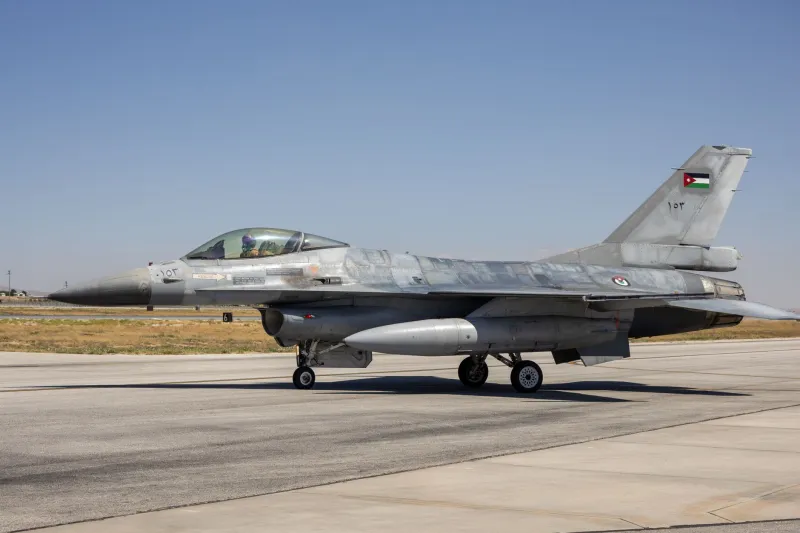
The problem compounded across aircraft platforms. The A-10 Thunderbolt II, whose TF34 turbofan engines sit in exposed nacelles above the fuselage, proved particularly vulnerable. Hydraulic systems on multiple airframes suffered seal degradation from particulate infiltration. Canopy seals on F-16s required replacement intervals measured in days rather than the weeks anticipated in maintenance scheduling models.
Engineering on the Fly
The response from depot-level engineers and forward-deployed maintainers was a sustained exercise in improvisation that the Air Force Materiel Command has only partially documented in public-facing records. Filtration modifications were developed at the flight line level and pushed upward through the logistics chain rather than downward from manufacturers — a reversal of the normal engineering hierarchy that speaks to the urgency of the situation.
At Al Jaber Air Base in Kuwait during Iraqi Freedom, maintenance crews attached improvised inlet barrier filter systems to F/A-18 Hornets operating in support of Marine aviation operations. The filters, adapted from designs originally developed for helicopter operations in dusty environments, reduced engine wear measurably but introduced a drag penalty and required their own maintenance cycle. The tradeoff was considered acceptable. An aircraft that could fly with slightly degraded performance was preferable to one that could not fly at all.
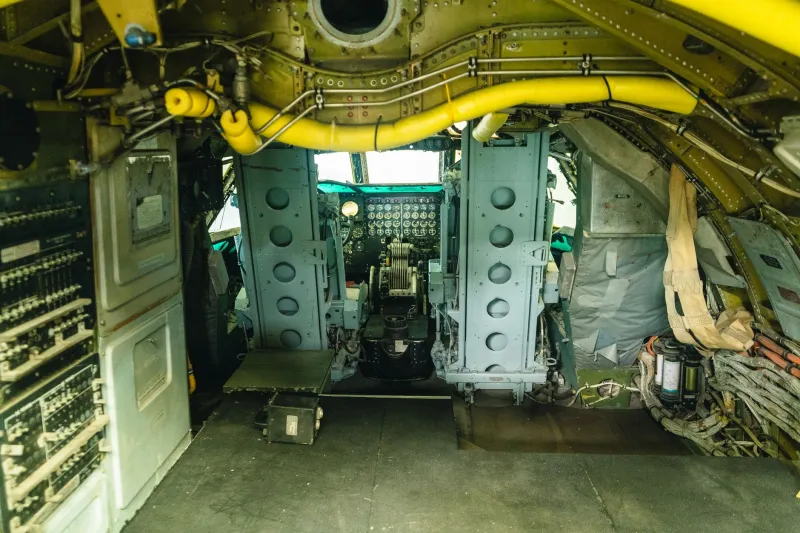
Heating presented a parallel challenge. Avionics systems designed for temperate operating environments encountered cockpit temperatures that exceeded their rated tolerances before engines were even started. Line replaceable units — the modular electronic components that modern combat aircraft depend upon — failed at rates that strained supply chains. Radar systems, inertial navigation units, and electronic warfare processors all registered accelerated failure frequencies that logistics planners scrambled to address in real time.
The Corrosion Problem Nobody Wanted to Discuss
If sand and heat were acknowledged adversaries, corrosion occupied a more uncomfortable institutional space. Maintenance doctrine had long treated corrosion as a long-term concern, something managed across an aircraft's service life through scheduled inspections and protective coatings. Iraq compressed that timeline dramatically.
The combination of fine sand acting as a mechanical abrasive and the salt-laden air that moved inland from the Persian Gulf stripped protective coatings from airframe surfaces with startling speed. Structural fasteners on multiple aircraft types showed corrosion signatures after deployment periods of weeks. Electrical connectors, whose integrity underpins the functionality of every sensor and weapons system on a modern combat aircraft, required inspection and treatment intervals that added hours to already demanding maintenance schedules.
Senior Airman Patricia Weston, who served as an aircraft structural maintainer with the 4th Fighter Wing during Iraqi Freedom, described the experience in terms that captured both the technical and psychological weight of the challenge. "You'd finish a corrosion treatment on one section of the aircraft and by the time you came back to it a week later, you were starting over," she recalled. "It felt like bailing out a boat with a cup."
The institutional reluctance to publicize corrosion data stemmed partly from legitimate operational security concerns and partly from the reality that corrosion rates implied questions about long-term fleet readiness that defense planners preferred not to answer publicly during active combat operations.
Readiness as a Strategic Variable
What the maintenance records ultimately reveal, when examined across the arc of American air operations in Iraq from 1991 through the mid-2000s, is that aircraft availability was not a given. It was an achievement, won daily through labor that began before dawn and often continued past midnight.
The sortie rates that American air planners cited as evidence of coalition air superiority — and they were genuinely impressive rates by historical standards — were possible only because maintenance personnel found ways to compress inspection cycles, prioritize repairs, and develop field-expedient solutions faster than the environment could degrade their aircraft. The margin between an operational air campaign and a grounded one was, at various points, considerably narrower than official histories have typically suggested.
This reality carries implications that extend beyond historical interest. As the United States Air Force and Navy continue to evaluate potential operating environments in arid regions, the lessons encoded in those Desert Storm and Iraqi Freedom maintenance logs remain directly applicable. The desert does not distinguish between generations of aircraft.
The Undecorated Victory
The maintainers who fought this war received no Air Medals. Their victories appeared in columns of numbers — mission capability rates, engine time-on-wing figures, sortie completion percentages — rather than in the dramatic imagery that defines public memory of aerial combat. Yet without their sustained, unglamorous effort, the air campaigns that shaped the modern Middle East would have looked very different.
For every pilot whose name appears in a combat narrative, there are dozens of technicians whose names appear only in maintenance logs that most Americans will never read. The desert tried to ground America's air war. These men and women refused to let it.