Steel Against Silicon: How Iraqi MiG Pilots Turned Soviet Doctrine Into a Survival Art
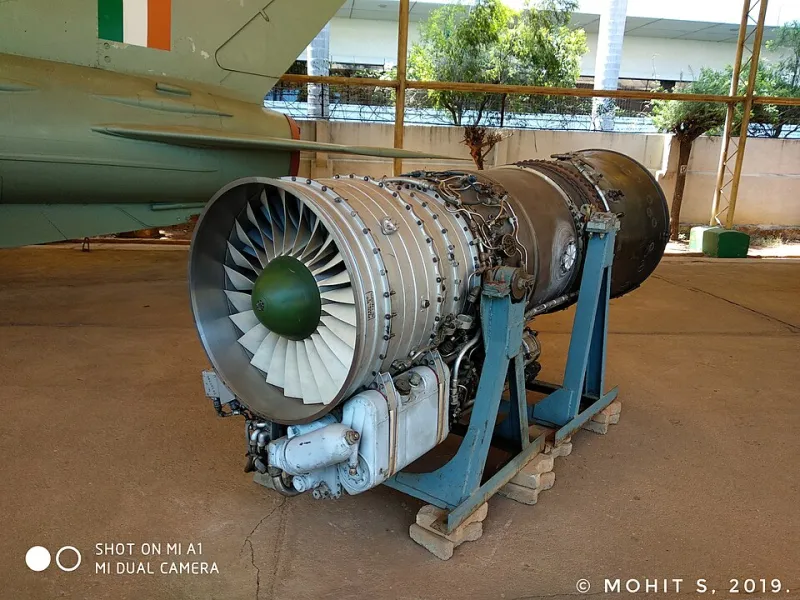
Photo: Mohit S from Mumbai, India, CC BY 2.0, via Wikimedia Commons
By any objective measure, the matchup was grotesque. American F-15C Eagles and F-16C Fighting Falcons arrived over Iraqi airspace carrying advanced pulse-Doppler radars, beyond-visual-range missiles, and decades of refined combat doctrine. Opposing them were Iraqi Air Force pilots strapped into MiG-21 Fishbeds and MiG-23 Floggers — airframes that had been outclassed technologically since the mid-1970s. Yet the story of Iraqi fighter resistance is not simply a tale of overwhelming defeat. It is, in significant measure, a story of tactical creativity operating at the absolute edge of what aging hardware and human ingenuity could achieve.
The Asymmetry on Paper
The gap between American and Iraqi platforms was not merely generational — it was categorical. The F-15C's AN/APG-63 radar could detect and track targets at ranges the MiG-21's RP-21 Sapfir simply could not match. American pilots carried the AIM-7 Sparrow and, later, the AIM-120 AMRAAM, weapons capable of engaging targets the Iraqi aviator could not yet see on his own scope. Beyond radar and missiles, American pilots benefited from AWACS integration, real-time datalinks, and ground control intercept networks that had been refined through years of exercises simulating precisely this kind of engagement.
Iraqi pilots had none of that architecture. What they had was intimate knowledge of their own terrain, a willingness to improvise, and a set of tactical adaptations that, in specific circumstances, proved genuinely dangerous.
Terrain Masking as a Combat Weapon
Perhaps the most consistently employed Iraqi tactic was the aggressive use of terrain masking. MiG-21 pilots, in particular, demonstrated a preference for ultralow-altitude ingress profiles — often below 200 feet — that exploited the limitations of airborne radar systems when looking down toward cluttered ground returns. Flying nap-of-the-earth profiles in a delta-wing fighter designed for high-altitude interception required exceptional skill and carried enormous personal risk. Iraqi pilots accepted that risk because the math was simple: a radar that could not reliably track them was a radar that could not kill them.
These low approaches also complicated the geometry for American pilots attempting to employ their beyond-visual-range missiles. The AIM-7's look-down, shoot-down performance, while significantly better than anything Iraq could field, still faced degraded probability-of-kill envelopes at very low altitudes against small targets moving at high speed. Iraqi pilots who understood this — and many did — deliberately forced engagements into that degraded envelope.
The Pop-Up Ambush
Building on terrain masking, Iraqi aviators developed what American analysts came to describe informally as the "pop-up" engagement profile. A pilot would approach at low altitude, using ridgelines or urban terrain to shield his radar signature, then climb sharply at close range to execute a rapid weapons release before diving back below the radar floor. The tactic sacrificed sustained engagement capability for the possibility of a single, high-surprise shot.
This approach was not unique to Iraq — Soviet doctrine had explored similar concepts — but Iraqi pilots adapted it to their specific operational environment with notable sophistication. Several engagements during the Gulf War's opening days demonstrated that the tactic was not merely theoretical. American pilots who encountered it described the experience as disorienting, precisely because it violated the expected geometry of a conventional intercept.
Deception, Dispersion, and the Psychology of Uncertainty
Beyond specific maneuvers, Iraqi air commanders employed a broader deception strategy designed to impose psychological friction on coalition planners. Aircraft were dispersed to civilian airfields, highway strips, and hardened shelters whose locations were not always confirmed in coalition targeting databases. Some MiGs were deliberately left visible on open ramps — decoys intended to absorb strike sorties while operational aircraft sheltered elsewhere.
This dispersion complicated American planning in ways that raw kill ratios do not capture. Every suspected Iraqi aircraft that could not be definitively located represented a potential threat that had to be accounted for in strike packages, escort assignments, and suppression missions. The psychological weight of an enemy you cannot fully locate is disproportionate to his actual combat power.
Iraqi pilots also employed radio silence with considerable discipline, denying American electronic intelligence aircraft the emissions they needed to build accurate threat pictures. Flights that did use radio communications sometimes did so in ways designed to suggest false positions or intentions — a rudimentary form of electronic deception that nonetheless consumed coalition analytical resources.
Where the Tactics Fell Short
Honesty demands acknowledgment of the limits. Iraqi tactical ingenuity, however genuine, could not overcome the fundamental disparity in training depth, maintenance quality, and systemic support. American pilots flew with thousands of hours of realistic adversary training behind them. Many Iraqi aviators, by the time Desert Storm began, were operating aircraft that had seen irregular maintenance under the strain of years of prior conflict with Iran.
The kill ratio across aerial engagements was lopsided in the extreme. American pilots achieved kills at beyond-visual-range before many Iraqi pilots could bring their own systems to bear. The few engagements where Iraqi aircraft posed serious threats were notable precisely because they were exceptions — moments where terrain, weather, geometry, or surprise temporarily neutralized American technological advantages.
Yet those exceptions mattered. They mattered to the American pilots who flew those missions and came home with a more nuanced understanding of what asymmetric air combat actually feels like. And they mattered to the doctrine writers who studied the engagements afterward.
A Legacy Written in Margins
The Iraqi fighter pilots who climbed into their Soviet-built cockpits against American fourth-generation fighters were not fighting to win air superiority. That goal was beyond reach from the opening hour of the campaign. They were fighting to survive long enough to matter — to impose costs, force hesitation, and deny coalition planners the clean, frictionless air war their doctrine promised.
In that narrow ambition, some of them succeeded. The margins they carved out were thin, measured in seconds of radar uncertainty and kilometers of terrain cover. But those margins were real, and they were earned through a form of tactical courage that deserves a more complete accounting than the final kill tallies suggest.
The story of Iraqi MiG pilots is not a story of victory. It is a story of what skilled aviators can accomplish when imagination substitutes for technology — and a reminder that no air campaign, however dominant, is ever entirely free of danger.