Expendable by Design: How Cheap UAVs Dismantled Iraq's Air Defense Architecture
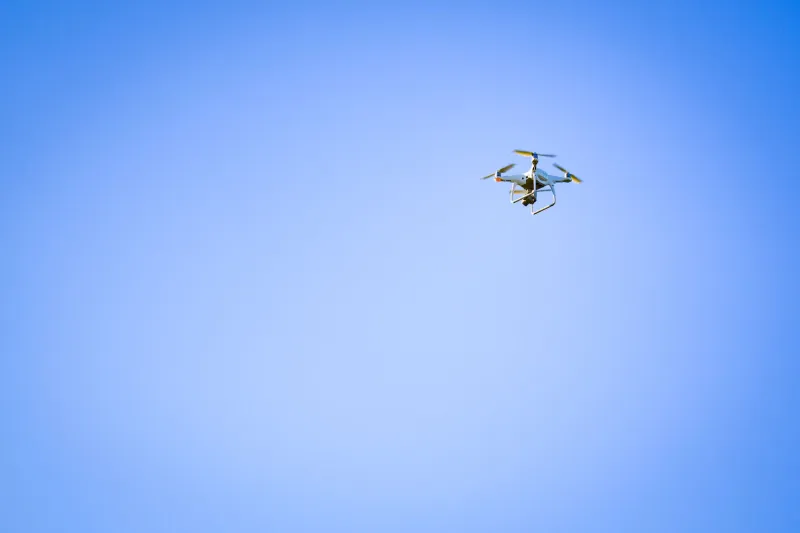
The aircraft cost less than a used pickup truck. It had no pilot, no ejection seat, and no self-preservation instinct. What it did have was a transponder, a radar reflector, and the singular mission of making Iraqi air defenders believe they were tracking something worth shooting at. When they fired, they revealed themselves. When they stayed silent, the drone logged their position anyway and flew on.
This was the quiet revolution that preceded every major coalition air operation over Iraq — a methodical, largely classified campaign in which unmanned aerial vehicles served as the outriders of American airpower, probing, baiting, and systematically disassembling the integrated air defense network that Iraqi commanders had spent decades assembling.
A Network Built for a Different Kind of War
Iraq's air defense architecture, at its apex during the late 1980s and into the Gulf War era, was genuinely formidable by regional standards. Baghdad had invested heavily in Soviet-supplied surface-to-air missile batteries, French-designed radar infrastructure, and a command-and-control network that theoretically linked disparate defensive nodes into a coordinated whole. Iraqi air defenders trained to engage high-performance jets operating at medium and high altitudes — the kind of threat doctrine that NATO had spent the Cold War preparing to counter.
What that doctrine did not account for, at least not initially, was the appearance of slow, low-observable, radar-reflector-equipped drones that could be launched in numbers sufficient to overwhelm tracking capacity. The Iraqi integrated air defense system was built around the assumption that threats would be fast, expensive, and worth the cost of an engagement. The coalition's UAV operators understood that assumption and exploited it ruthlessly.
The Logic of the Decoy
The tactical concept was deceptively straightforward. If you can force an adversary's radar operators and missile battery commanders to make engagement decisions under time pressure, you compress their decision cycle. Compress it enough, and they make mistakes. They fire on the wrong target. They reveal a previously silent radar installation. They exhaust surface-to-air missile inventory on targets with no military value. Most critically, they illuminate themselves — and once an Iraqi radar site transmitted, coalition electronic warfare assets and anti-radiation missiles were already tracking the signal.
Early UAV operations over Iraq drew on lessons learned from Israeli operations in Lebanon's Bekaa Valley in 1982, where drone decoys had been used with devastating effectiveness against Syrian air defenses. American planners absorbed those lessons and expanded the concept significantly. By the time Operation Desert Storm commenced in January 1991, the ADM-141 Tactical Air-Launched Decoy had entered the coalition toolkit, capable of mimicking the radar signature of a full-size combat aircraft while flying preprogrammed routes over defended territory.
The results were immediate and measurable. Iraqi radar operators, uncertain whether they were tracking a decoy or a genuine strike package, faced an impossible calculus. Engaging cost missiles and exposed their positions. Withholding fire risked allowing a real strike aircraft to pass unmolested. There was no clean answer, and that cognitive pressure was precisely the point.
Mapping the Invisible
Beyond the decoy function, UAVs performed an intelligence-collection role that proved equally decisive. Pioneer drones — the ungainly, twin-boom unmanned aircraft operated jointly by the Navy and Marine Corps — flew hundreds of hours over Iraqi territory during Desert Storm, transmitting real-time imagery that allowed commanders to assess battle damage, track troop movements, and identify previously unknown defensive positions.
The intelligence value extended beyond what the cameras captured. Every time an Iraqi radar installation activated to track an incoming UAV, it broadcast its location, its operating frequency, and its engagement parameters. Coalition electronic warfare aircraft catalogued those emissions with precision. Over the course of weeks, the picture of Iraq's air defense network grew steadily more complete — not through the heroic sacrifice of manned reconnaissance aircraft, but through the patient, methodical work of machines that nobody mourned when they were lost.
By the time Operation Iraqi Freedom commenced in March 2003, the UAV inventory had expanded dramatically. Predator drones, operating at medium altitude with electro-optical and infrared sensors, provided persistent surveillance that ground commanders had never previously enjoyed. More importantly, the lessons of decoy employment had been institutionalized into coalition air campaign planning in ways that made Iraqi air defense operators' jobs genuinely untenable.
The Rethinking That Never Fully Arrived
Iraqi air defense commanders understood, at some level, that they were being manipulated. Intercepted communications and post-conflict debriefs of captured officers suggest that Iraqi radar operators developed informal protocols for distinguishing drone signatures from manned aircraft — assessing flight profiles, speed parameters, and altitude bands to filter probable decoys from genuine threats.
Those protocols were imperfect, and their imperfection was fatal. A drone flying a slightly irregular course, or operating at an altitude associated with strike aircraft, could still trigger an engagement response. And once a battery fired, the calculus reversed entirely — coalition anti-radiation missiles, already orbiting at altitude, had a solution within seconds.
The deeper problem for Iraqi planners was doctrinal rather than technical. Their air defense system had been designed, procured, and trained around a specific threat model. Adapting that system in real time, under fire, against an adversary who was actively learning and adjusting, proved beyond their institutional capacity.
A Legacy Still Being Written
The drone campaigns over Iraq established principles that continue to shape American air power planning. The integration of unmanned decoys and surveillance platforms into the opening phases of an air campaign is now standard doctrine, refined through years of operational experience in Iraqi and Afghan airspace. The concept of using expendable assets to map and suppress enemy air defenses before committing manned aircraft has become a foundational assumption of how the United States plans to fight in contested environments.
The Iraqi air defense network — built at enormous cost, maintained through years of international sanctions, and staffed by operators who were, by most accounts, genuinely skilled — was systematically dismantled not primarily by stealth aircraft or precision munitions, but by machines that cost a fraction of the weapons used to destroy them. That asymmetry, more than any single technical achievement, defines what the UAV campaigns over Iraq actually accomplished.
The drones were expendable by design. The air defenses they dismantled were not.