Thirty Nations, One Sky, Zero Margin: The Hidden Fractures in Coalition Air Operations Over Iraq
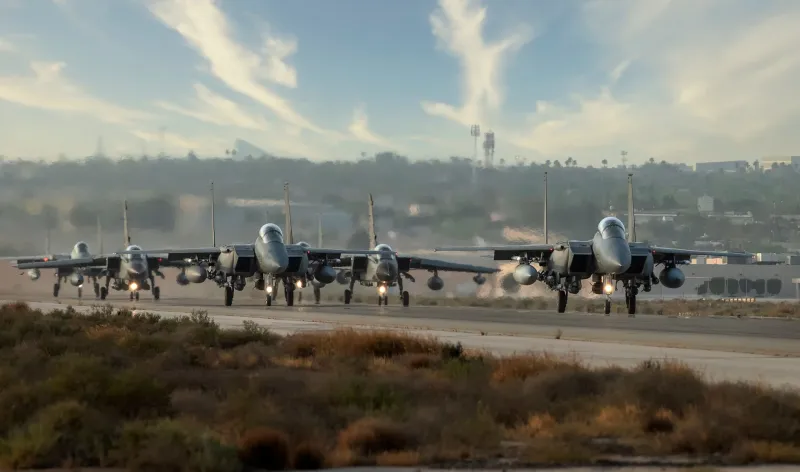
The airspace over Iraq during the Gulf War was, by any objective measure, one of the most complex aerial environments ever managed. At peak operational tempo, coalition planners were coordinating the movements of more than two thousand aircraft sorties per day, drawn from the air forces of more than thirty nations, operating under different rules of engagement, flying different aircraft types, and in some cases communicating in languages that their coalition partners did not speak. That it functioned at all was a significant achievement. That it functioned as well as it did, with relatively few catastrophic failures, required a level of continuous improvisation that the official histories have tended to understate.
The frictions were real, they were consequential, and they were rarely discussed in the press conferences that shaped public understanding of the coalition's cohesion.
The Language Problem Nobody Wanted to Admit
English is the designated language of international aviation, codified by the International Civil Aviation Organization as the standard for air traffic communications. In practice, English proficiency among coalition aircrew varied enormously, and the precise, abbreviated radio phraseology used in combat operations presented challenges that peacetime training had not fully anticipated.
American and British aircrew, operating with identical radio procedures and a shared doctrinal vocabulary, could exchange complex tactical information in seconds. Aircrew from nations where English was a second or third language, trained to adequate proficiency for routine operations, sometimes struggled under the cognitive load of combat — when adrenaline was high, when information was arriving faster than it could be processed, and when the consequences of misunderstanding a transmission were measured in aircraft and lives.
Controllers working from the Airborne Warning and Control System aircraft — the E-3 Sentry that served as the coalition's airborne traffic management hub — developed informal protocols for managing non-native English speakers, simplifying transmission structure and increasing read-back requirements for aircraft whose crews were known to have limited language proficiency. These adaptations worked, but they consumed controller bandwidth and slowed the information flow that kept the air campaign moving efficiently.
The problem was not limited to air-to-air communications. Intelligence products, target packages, and rules-of-engagement summaries were distributed primarily in English. Coalition partners who received these documents translated them through national interpretation filters that sometimes introduced ambiguities. A targeting restriction that was absolute in the American understanding of the document might read, through translation and cultural context, as a strong preference rather than a hard prohibition.
Rules of Engagement: Where Doctrine Became Friction
Perhaps no issue generated more quiet tension within coalition command structures than the divergence in national rules of engagement. Each participating nation arrived with its own legal framework governing when and under what circumstances its aircraft could engage targets, accept weapons release authority, and operate in proximity to civilian infrastructure. These frameworks reflected national legal systems, domestic political constraints, and differing interpretations of international humanitarian law.
Some coalition partners imposed geographic restrictions that limited their aircraft to specific operational areas, declining to participate in missions over certain target categories. Others required national approval authority for specific strike categories that American procedures delegated to individual aircrew or flight leads. The practical effect was that a mixed-nationality strike package might include aircraft operating under materially different authorities — a situation that required careful deconfliction in planning and real-time judgment calls that planners had not always anticipated.
After-action reports from Desert Storm document instances where coalition aircraft declined weapons release on targets that American crews considered clearly valid, citing national restrictions that had not been fully communicated during the planning phase. The operational effect was generally manageable — other aircraft completed the mission — but the pattern exposed a structural vulnerability in how coalition targeting authorities were integrated.
By Operation Iraqi Freedom in 2003, planners had developed more sophisticated mechanisms for mapping national restrictions into the master air attack plan, flagging missions that required specific national participation and routing those requirements through appropriate approval chains in advance. The system was better, but it was also more bureaucratically complex, and complexity in a fast-moving air campaign creates its own risks.
Technology Gaps and the Interoperability Problem
The coalition's technological disparity was as significant as its doctrinal divergence. American and British aircraft, operating with compatible datalink systems, could share real-time situational awareness pictures that transformed how their crews understood and managed the battlespace. A British Tornado crew could see the positions of American F-15s on their display, deconflicting routes and identifying threats without voice communication. Coalition partners operating older aircraft without compatible datalink equipment were, in a meaningful sense, flying blind to the information environment that American crews took for granted.
This gap had tactical consequences. Aircraft without situational awareness displays required more controller attention to deconflict from other traffic, consuming AWACS capacity that would otherwise have been available for threat management. They were also more dependent on voice communications for coordination, increasing radio frequency congestion at precisely the moments when clarity mattered most.
The identification friend-or-foe problem was related and serious. Different nations operated different IFF — identification friend or foe — systems with varying levels of interoperability. An American radar operator interrogating a contact that failed to respond with a recognized IFF code faced a genuine ambiguity: was this an Iraqi aircraft, a coalition partner with incompatible equipment, or a friendly aircraft whose IFF system had malfunctioned? The decision timeline for that judgment, in a high-threat environment, was measured in seconds.
Documented near-misses from both Desert Storm and later operations over Iraq include incidents where coalition aircraft were briefly tracked as potential threats before IFF ambiguities were resolved through voice communication or visual identification. None of these incidents resulted in fratricide, but the margin was uncomfortably thin on more than one occasion.
Cultural Dimensions of Command
Beyond technology and doctrine, coalition operations exposed cultural differences in how military hierarchies function and how authority is exercised. American military culture, particularly in aviation, places substantial decision-making authority at relatively low organizational levels — a flight lead or even a wingman may have authority to make consequential tactical decisions without reference to higher headquarters. This decentralization enables speed and adaptability but assumes a shared doctrinal framework that coalition partners did not always share.
Some coalition air forces operated under considerably more centralized command cultures, where junior officers were expected to seek guidance rather than exercise initiative. In the fluid environment of combat air operations, this difference manifested in ways that were sometimes operationally significant. A coalition pilot who, by American doctrinal expectation, should have made an independent targeting decision instead sought authorization from a headquarters that was not monitoring the relevant communications frequency — and the engagement window closed.
Senior coalition commanders were aware of these tensions and worked to manage them through liaison officer exchanges, joint training exercises, and the careful assignment of coalition partners to missions that matched their capabilities and authorities. The effort was genuine and largely successful. But it required a sustained investment of diplomatic and organizational energy that rarely appeared in the operational summaries that reached the public.
What the Coalition Actually Achieved
None of this is to suggest that the coalition air campaigns over Iraq were failures of coordination. By any reasonable historical standard, the integration of dozens of national air forces into a functioning, effective air campaign was a remarkable organizational achievement. The Air Tasking Order — the master document that synchronized coalition air operations — grew to hundreds of pages in length and was updated daily, a logistical and analytical feat that depended on the contributions of planners from multiple nations working in shared facilities under genuine time pressure.
The frictions were real. They were also, in the end, managed. The near-misses were resolved before they became disasters. The communication gaps were bridged, however imperfectly, by controllers and liaison officers who understood that the alternative was unacceptable.
What the historical record demands is honesty about how difficult that management actually was — and how much it depended on individuals performing at the outer limits of their professional competence, in conditions that left no margin for the kind of errors that coalition doctrine had not fully anticipated.