Grounded Before Takeoff: The Deliberate Unraveling of America's Iraqi Air Force Legacy
In the months preceding the final American withdrawal from Iraq, a quiet but consequential decision was taking shape inside the Pentagon and the corridors of the State Department. It was not announced with a press conference. It did not generate significant debate on Capitol Hill. Yet its effects would reverberate across the Middle East for more than a decade. The United States, after years of modest investment in rebuilding the Iraqi Air Force, chose to walk away — not because the project had failed, but in many respects because completing it had become politically inconvenient.
Understanding how that choice was made, and why it mattered, requires looking beyond the familiar narrative of an Iraqi military that simply collapsed under pressure. The collapse, at least from the air, had been engineered long before ISIS ever seized Mosul.
A Force Built on Borrowed Time
The Iraqi Air Force that emerged after 2003 was never designed for independence. American planners, operating under the Coalition Air Force Transition Team and later the Office of Security Cooperation–Iraq, envisioned a phased development program spanning roughly fifteen years. The early benchmarks were modest: basic fixed-wing reconnaissance capability, limited close air support, and a rudimentary helicopter fleet capable of supporting ground operations.
By 2009, that framework was producing measurable results. Iraqi pilots trained on the Cessna 172 and later the T-6 Texan II were accumulating flight hours. A small cadre of C-130 transport crews had completed qualification pipelines at Little Rock Air Force Base in Arkansas. There were genuine signs of institutional momentum — not the dramatic combat power of a mature air force, but the foundational competence that serious capacity-building requires.
Then the political calendar intervened.
The Status of Forces Agreement signed in 2008 established December 31, 2011, as the deadline for the withdrawal of all U.S. combat forces. What the agreement did not address with any precision was the fate of the advisory and training infrastructure that American airpower professionals had spent years constructing. As the deadline approached, that ambiguity became a liability.
The Memo That Shaped a Vacuum
Among the planning documents that have since been partially declassified, a 2010 assessment prepared by the Office of Security Cooperation–Iraq stands out for its candor. The document acknowledged that the Iraqi Air Force would not achieve what planners termed "minimum essential capability" before the withdrawal deadline. It outlined three possible courses of action: accelerate training with additional resources, extend the advisory mission under a renegotiated agreement, or accept the capability gap and manage the risk through continued American air presence in the region.
The third option, framed as the most politically viable, became the default. The assumption embedded within it — that American airpower stationed in Kuwait, Bahrain, and aboard carrier strike groups could compensate indefinitely for Iraqi aerial deficiency — would prove catastrophically optimistic.
Military advisors who served during this period describe a bureaucratic environment in which raising concerns about the capability gap was actively discouraged. The withdrawal was a policy achievement, and institutional pressure to validate that achievement was substantial. Assessments that complicated the narrative faced revision or burial.
What Was Left Behind
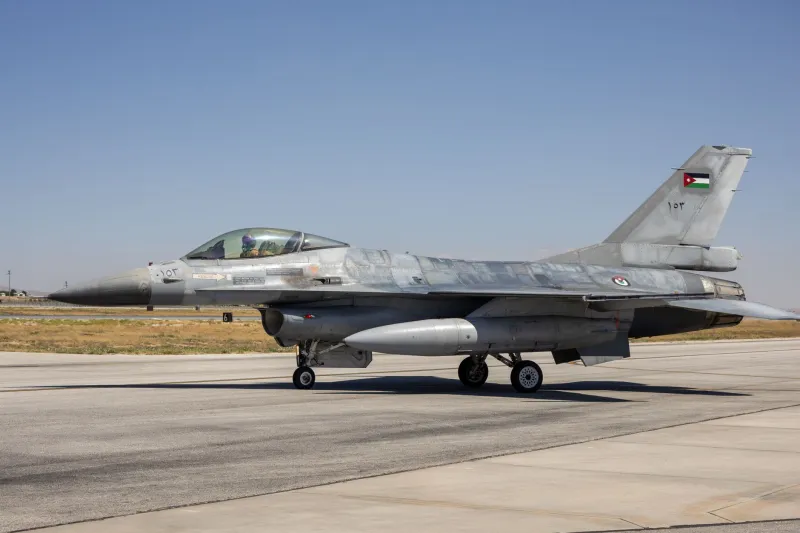
By the time the last American advisors departed, the Iraqi Air Force possessed a fleet of aircraft that was, by any honest accounting, inadequate for the security environment it faced. The promised F-16 deliveries — a program that had been negotiated with considerable fanfare — were delayed by export licensing complications and Congressional holds that stretched the timeline by years. The light attack aircraft that Iraqi pilots were actually flying offered limited capability against the kind of dispersed, fast-moving insurgent forces that would define the post-2011 threat landscape.
Perhaps more damaging than the equipment shortfall was the institutional void. The training pipelines that American advisors had built were not transferred to a self-sustaining Iraqi structure. The maintenance culture, the operational planning processes, the intelligence integration that makes an air force function as a coherent instrument rather than a collection of flying machines — these were still largely dependent on American scaffolding. When that scaffolding was removed, the structure did not stand on its own. It sagged.
Retired Air Force Colonel David Menne, who served as a senior advisor to the Iraqi Air Force during the transition period, has described the situation with characteristic directness: "We handed them a partially assembled aircraft and told them to fly it. The parts we kept were the ones that actually made it go."
The ISIS Reckoning
When the Islamic State launched its stunning offensive across northern Iraq in the summer of 2014, the aerial dimension of the Iraqi military's failure received relatively little attention in the American press. The focus fell, understandably, on the collapse of ground units — the abandonment of Mosul by multiple Iraqi Army divisions, the loss of enormous quantities of American-supplied equipment.
But the absence of effective Iraqi airpower was not incidental to that collapse. It was structural. ISIS commanders understood that they were operating in skies that were, for all practical purposes, uncontested. The Iraqi Air Force flew sporadic missions, but without the surveillance infrastructure, the targeting pipelines, or the sustained sortie rates necessary to meaningfully shape the ground battle. The power vacuum that enabled ISIS to consolidate territorial control with such speed was not only a ground-force phenomenon. It extended three thousand feet above the desert floor.
The Obama administration's subsequent decision to re-engage — to deploy American air assets and, eventually, to resume the training mission that had been abandoned three years earlier — represented an implicit acknowledgment of what the withdrawal had cost. The accelerated delivery of F-16s to Iraq, completed in 2015, came too late to prevent the catastrophe and carried a bitter irony: the aircraft had been in the pipeline for years, delayed in part by the same bureaucratic indifference that had characterized the broader training drawdown.
A Lesson Unlearned
The story of America's abandoned Iraqi air force doctrine is not, at its core, a story about Iraqi capability. The pilots who completed American training pipelines performed credibly within the limits of what they had been given. The maintenance crews who kept aging aircraft flying under difficult conditions demonstrated genuine professionalism. The failure was not theirs.
It was a failure of American strategic patience — the unwillingness to accept that building a functional air force requires not years but decades, and that the political costs of maintaining an advisory presence past a convenient deadline are almost always lower than the strategic costs of leaving before the work is finished.
The doctrine that could have given Iraq a viable aerial defense was never fully written. What was written was set aside when it became inconvenient. The skies over Iraq paid the price, and so did the people beneath them.