Thirty Thousand Feet of Tension: How Coalition Pilots Bridged Distrust to Share Iraqi Skies
In the popular imagination, coalition air warfare is a seamlessly choreographed ballet — jets from a dozen nations gliding through shared skies in perfect harmony, bound together by common purpose and interoperable technology. The reality, as every aviator who flew over Iraq during Operations Desert Storm, Southern Watch, Northern Watch, and Iraqi Freedom can attest, was considerably messier. The skies above Iraq were not simply a battlefield. They were a negotiating table, and the diplomats wore flight suits.
Coordinating multinational airpower over a contested theater is an enormously complex undertaking under the best of circumstances. Over Iraq, those circumstances were rarely best. American, British, Australian, French, Saudi, Kuwaiti, and other allied pilots shared airspace governed by an overlapping patchwork of national rules of engagement, incompatible identification-friend-or-foe systems, political red lines imposed by home governments, and, perhaps most corrosively, mutual suspicion born of divergent threat assessments and institutional cultures that had evolved independently for decades.
When the Rules Don't Match
At the heart of the coordination problem was a fundamental asymmetry in how coalition nations defined acceptable risk and authorized lethal force. American pilots operating under U.S. Central Command authority generally worked within rules of engagement that, while restrictive by some historical standards, granted more latitude for self-defense and pre-emptive action than those governing many allied counterparts. British Royal Air Force crews, for instance, operated under distinct legal frameworks shaped by United Kingdom parliamentary oversight and international law interpretations that sometimes differed materially from American practice.
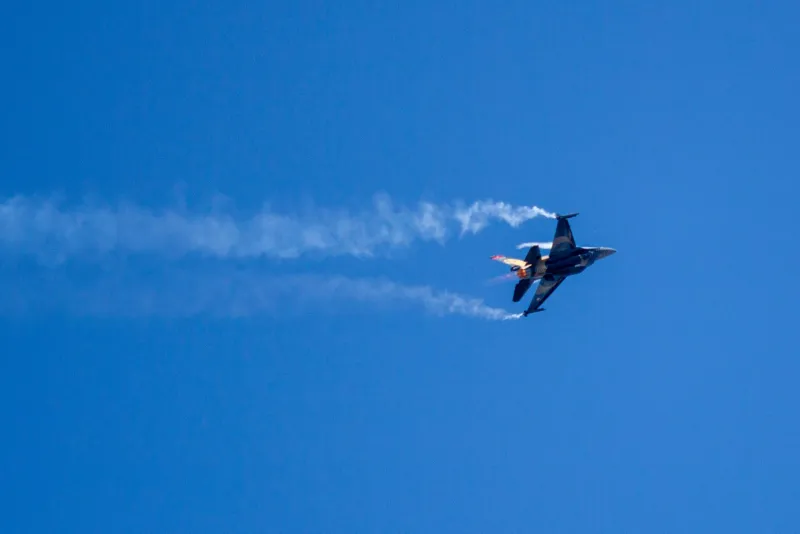
This divergence was not academic. During the long years of Operation Southern Watch — the multinational effort to enforce the no-fly zone over southern Iraq from 1992 until the 2003 invasion — coalition aircraft regularly patrolled in close proximity. When Iraqi surface-to-air missile batteries painted coalition jets with fire-control radar, the question of whether and how to respond was not always answered the same way by pilots wearing different flags on their shoulders. An American F-16 crew cleared to prosecute a radar site under one set of rules might find a British Tornado crew operating alongside them under instructions that required additional authorization before weapons release. The result, in at least several documented instances, was confusion, delayed responses, and post-mission friction that traveled swiftly up the chain of command.
The IFF Problem
Beyond rules of engagement, the purely technical challenge of identification presented a persistent hazard. Identification-friend-or-foe systems — the electronic transponders that allow aircraft to announce their allegiance to radar operators and other aircrews — were not uniformly compatible across all coalition partners during the Gulf War era. Some regional allies operated older NATO-standard equipment; others flew aircraft with systems that had been modified, downgraded for export, or simply not updated to the latest interrogation modes used by U.S. forces.
The consequences of IFF failures in a dense airspace environment can be catastrophic. Coalition airspace managers invested enormous effort in developing procedural workarounds — altitude deconfliction, geographic corridor assignments, strict timing windows — to compensate for the gaps that technology could not fully close. Pilots were briefed on the identification limitations of specific partner nations' aircraft. Sector controllers maintained heightened vigilance during periods when allied jets transited areas where U.S. systems might not reliably distinguish them from hostile contacts. These measures reduced risk. They did not eliminate it.
Political Ceilings at Altitude
The tensions were not confined to cockpits and control rooms. Coalition airspace coordination was inextricably entangled with the political calculations of sovereign governments whose domestic audiences held views about the Iraq campaigns that sometimes conflicted sharply with Washington's objectives. France, a partner in Southern Watch, periodically imposed constraints on its pilots' participation in retaliatory strikes against Iraqi air defense targets following provocations — constraints that American commanders found frustrating and that contributed to France's eventual withdrawal from the no-fly zone enforcement mission in 1996.
Regional Arab partners brought their own sensitivities. Saudi Arabia, which hosted U.S. and coalition aircraft at Prince Sultan Air Base and other installations, maintained restrictions on the types of missions its own pilots would join and the targets they would strike. Kuwaiti and other Gulf state aircrews, flying alongside American counterparts, operated under political constraints imposed by governments acutely aware of domestic and regional opinion regarding the use of Arab airpower against a fellow Arab state. Navigating these realities required U.S. air commanders to function simultaneously as military planners and diplomatic intermediaries — brokering compromises between operational necessity and political feasibility at every level of the coalition structure.
Near-Misses and Hard Lessons
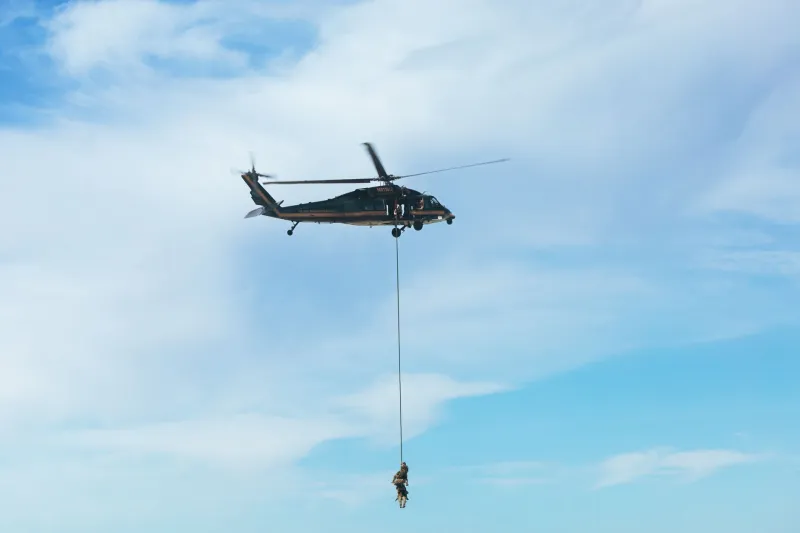
The most sobering dimension of multinational airspace management is the catalog of near-misses that rarely surface in official histories. Aviators who flew Southern Watch and Iraqi Freedom rotations speak, often with striking candor in private, about moments when ambiguity in identification, a lapse in communication, or a misread tactical situation brought aircraft to the edge of a fratricide incident. The 1994 Black Hawk shootdown over northern Iraq — in which U.S. Air Force F-15s destroyed two U.S. Army helicopters operating in the same theater — stands as the most devastating reminder of what coordination failures can produce, even among aircraft of the same nationality.
The lessons absorbed from that tragedy and from the accumulated near-misses of the no-fly zone years shaped the intensive airspace management architecture deployed for Operation Iraqi Freedom in 2003. The Combined Air Operations Center at Prince Sultan Air Base and later at Al Udeid Air Base in Qatar became one of the most sophisticated multinational coordination facilities ever assembled, integrating liaison officers from every major coalition partner into a single, if imperfect, command structure. Real-time data links, standardized communication procedures, and pre-coordinated deconfliction plans reduced — though never eliminated — the hazards of operating alongside partners whose systems, rules, and instincts did not always align.
The Diplomacy That Never Made Headlines
What the historical record tends to obscure is the sheer volume of unglamorous, painstaking work performed by the liaison officers, airspace coordinators, and staff planners who made coalition air operations function at all. These individuals — many of them mid-grade officers with deep knowledge of both their own nation's systems and those of their partners — spent countless hours negotiating procedural agreements, resolving disputes over airspace boundaries, and translating between institutional cultures that sometimes seemed to speak entirely different operational languages.
Their work did not generate after-action citations or combat decorations. It generated functional airspace. In a theater where thousands of sorties were flown by aircraft of a dozen nationalities over more than a decade, the absence of large-scale fratricide incidents stands as a testament to their collective competence — and to the recognition, shared across coalition air forces despite all their differences, that the alternative to imperfect coordination was something far worse.
The skies over Iraq were never truly unified. They were managed, negotiated, and occasionally argued over by men and women who understood that keeping the coalition together in the air was, in its own way, as important as any single strike mission. That story deserves to be told.