Inventory of the Invisible: Tracing the Iraqi Aircraft That History Cannot Account For

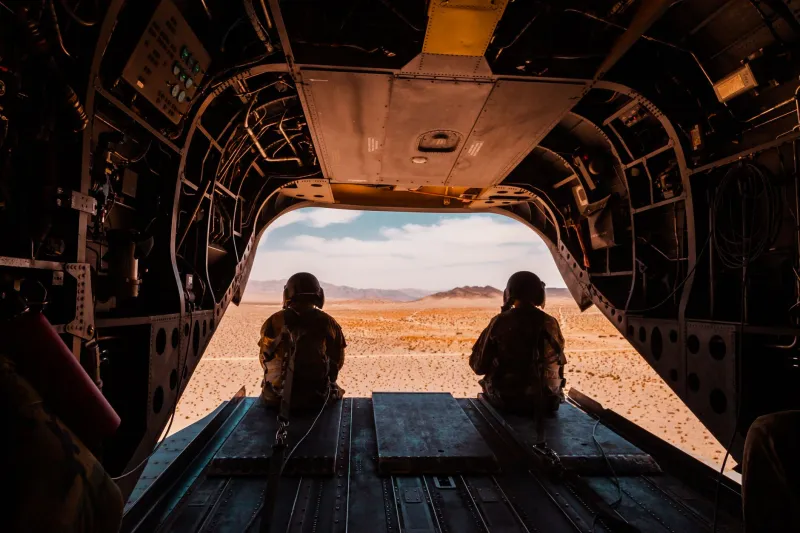
Photo by Photo by MAVIC 101 on Unsplash on Unsplash
A Ledger That Has Never Closed
When coalition forces swept into Baghdad in April 2003, they expected to find an air force. What they found instead was a puzzle — a sprawling collection of hardened shelters, abandoned runways, and aircraft in various states of destruction, burial, or simply absence. The Iraqi Air Force, once the fourth-largest in the Arab world, had seemingly dissolved into the desert. Some of its machines were bombed into wreckage. Others were captured and catalogued. But a portion of the fleet resisted every effort at accounting, and that portion has never been satisfactorily explained.
This is not a minor administrative discrepancy. The Ba'athist government operated hundreds of fixed-wing aircraft and rotary platforms across multiple decades, acquiring hardware from the Soviet Union, France, China, and a constellation of smaller suppliers. At its peak in the mid-1980s, the Iraqi Air Force maintained an operational inventory that Western analysts estimated at somewhere between 700 and 950 aircraft, depending on the source and the year. By 2003, official estimates had reduced that number dramatically — but the methodology behind those reductions has always been contested.
What the Pentagon Records Actually Show
Declassified post-conflict assessments released through the Defense Intelligence Agency and later reviewed by the Government Accountability Office paint a fragmented picture. Coalition forces confirmed the destruction or capture of several hundred airframes during and after the 2003 invasion. Bomb-damage assessments from Operation Desert Storm in 1991 added another substantial tranche of confirmed kills. Yet when analysts attempted to reconcile these figures against the known pre-war inventory, the arithmetic consistently produced a remainder — a number of aircraft that could not be placed into any verified category.
Some of this discrepancy is attributable to the inherent imprecision of intelligence estimates. Iraqi records were deliberately falsified, and the regime maintained multiple sets of documentation to confuse foreign analysts. Aircraft were frequently moved between bases, cannibalized for parts, or registered under multiple tail numbers as part of a deliberate obfuscation strategy. What looks like a missing aircraft may simply be a double-counted one.
But that explanation does not account for everything.
The Iranian Corridor and the Desert Burial Question
Two specific theories have persisted in open-source intelligence circles for more than two decades. The first involves aircraft flown to Iran during the Gulf War. In January and February of 1991, as coalition air campaigns devastated Iraqi airfields, a significant number of Iraqi aircraft — estimates range from 115 to 148 — flew east across the border into Iranian territory. The Iranian government impounded them. Some were eventually absorbed into Iranian service. Others were reportedly dismantled. But a full accounting of those aircraft has never been provided by Tehran, and the subject remains a minor but recurring point of friction in regional diplomatic discussions.
The second theory is more dramatic and, in some ways, more troubling. Following the 2003 invasion, coalition ground forces discovered several aircraft that had been buried in the desert — literally entombed beneath sand and earth, preserved against future use or hidden from inspection teams. The discovery of a MiG-25 buried at Al Taqqadum air base generated significant media attention at the time. If one aircraft could be buried successfully, the logical follow-on question is obvious: how many others were buried, and how many have never been found?
Satellite imagery analysis conducted by independent researchers in the years following the invasion identified multiple sites where soil disturbance patterns were consistent with large-scale burial operations. Not all of those sites were excavated. Resource constraints, security conditions, and shifting strategic priorities meant that some areas of interest were never fully investigated.
What Reappearance Would Mean
The question of whether unaccounted Iraqi aircraft still exist in foreign hangars or beneath desert soil is not purely historical. In a region as volatile as the Middle East, the sudden reappearance of military hardware — even hardware that is decades old — carries strategic weight.
A MiG-25 Foxbat, for instance, remains a capable high-altitude reconnaissance platform even by contemporary standards. Several Iraqi Mirage F1 variants, if properly maintained, could still serve as viable ground-attack assets in the hands of a non-state actor or a regional power with limited air capabilities. The concern is less about the aircraft themselves and more about what their reappearance would signal: that hidden caches of military equipment survived the post-war accounting process, and that similar concealments might exist elsewhere.
This concern is not theoretical. The emergence of ISIS-controlled territory after 2014 demonstrated conclusively that military hardware from the Ba'athist era had survived in forms and quantities that intelligence assessments had not anticipated. Aircraft were a different category of asset — harder to hide, harder to operate without infrastructure — but the principle held.
The Limits of Closure
Former coalition analysts who have spoken on background about the aircraft accounting problem tend to converge on a similar conclusion: complete closure is probably not achievable. The records are too fragmented, the terrain too vast, and the political will to pursue definitive answers too limited to expect a final tally. What can be said with reasonable confidence is that the official post-war inventory underrepresents the true scope of the Iraqi Air Force's final years, and that the gap between confirmed losses and known acquisitions has never been fully bridged.
For historians, that gap is an invitation to keep asking questions. For military planners, it is a reminder that the end of a conflict does not automatically resolve the material questions that conflict leaves behind. Somewhere in the desert, or in a foreign facility that has never been fully disclosed, the last entries in the Iraqi Air Force's ledger may still be waiting to be written.
The sky over Iraq has been quiet for years. The inventory has not yet closed.