The Enemy Beneath the Paint: How Iraq's Climate Waged a Silent War on Aircraft and Airpower
In the popular imagination, military aviation is defined by the drama of combat — missiles threading through night skies, cockpits lit by the flash of weapons release, the tense silence before a strike. But for the men and women who kept coalition aircraft flying over Iraq across three decades of intermittent conflict, the most persistent adversary was never guided by ideology or armed with a radar lock. It moved invisibly, worked constantly, and never declared a ceasefire. It was the environment itself.
The Iraqi theater presented a convergence of atmospheric hostilities that few military planners fully anticipated before Desert Storm in 1991 — and that coalition maintenance crews were still grappling with during Operation Iraqi Freedom more than a decade later. Sand, extreme thermal cycling, humidity carried in from the Persian Gulf, and corrosive salt air from coastal operating bases combined to create a degradation environment that consumed aircraft components at rates that shocked even experienced ground crews.
Sand as a Weapons System
To understand the maintenance crisis that unfolded in the Iraqi theater, it is necessary to appreciate what fine desert particulate actually does to a jet engine at operational tempo. The sand found across Iraq and Kuwait is not the coarse, granular material most Americans associate with beach vacations. It is an ultra-fine silicate powder — in some regions approaching talc in consistency — capable of infiltrating engine compressor stages, abrading turbine blades, and depositing glass-like residue on combustion chamber surfaces after it vitrifies under extreme heat.
Maintenance personnel who worked the flight lines at forward operating bases in Kuwait and later at Balad Air Base in central Iraq described conditions that were, in the words of one Air Force crew chief, "like trying to keep a precision instrument running inside a sandblaster." Engine inspections that would normally occur at established hour intervals had to be accelerated dramatically. Compressor blade erosion that might take thousands of flight hours to manifest under stateside conditions appeared after a fraction of that exposure in theater.
Helicopter platforms suffered disproportionately. The Apache gunship and the Black Hawk utility helicopter, both operating extensively at low altitudes where particulate concentration was highest, required rotor blade leading-edge erosion strip replacements at intervals that strained supply chains. Rotor hub bearings — components designed to endure millions of cycles — showed accelerated wear patterns that maintenance teams had not encountered during training in the continental United States.
Heat, Humidity, and the Chemistry of Corrosion
Beyond the mechanical abrasion of sand, the Iraqi environment introduced a more insidious threat: electrochemical corrosion driven by the interaction of heat, salt-laden air, and dissimilar metals within aircraft structures. Summer temperatures at forward bases routinely exceeded 120 degrees Fahrenheit on the flight line, and the thermal expansion and contraction of airframe components over daily cycles created microscopic gaps in protective coatings where moisture could infiltrate.
The Persian Gulf's proximity to several coalition operating bases introduced salt air into the equation. Salt is among the most aggressive accelerants of galvanic corrosion, attacking aluminum airframe panels, magnesium components in engine housings, and the steel fasteners that hold aircraft structures together. Crew chiefs described discovering corrosion on airframes that had arrived in theater only weeks earlier — degradation timelines that defied standard maintenance manuals written with temperate operating environments in mind.
Avionics were equally vulnerable. The combination of fine conductive dust and high ambient humidity created conditions under which circuit boards and connector pins suffered accelerated oxidation. Electronic warfare pods, radar systems, and targeting computers required cleaning and inspection cycles far beyond what their manufacturers had specified. Replacement parts consumed at elevated rates strained depot-level supply pipelines that had not been scaled for sustained combat operations in extreme environments.
The Iraqi Air Force's Longer Struggle
While coalition forces battled the environment with the resources of the world's most capable military logistics system, the Iraqi Air Force had faced the same enemy for decades with far fewer tools — and ultimately lost. The degradation of Iraqi airpower between the Gulf War and the 2003 invasion was not solely a product of UN sanctions, though sanctions certainly accelerated the collapse. The Iraqi Air Force's inability to source corrosion-inhibiting compounds, replacement engine components, and specialized maintenance equipment meant that aircraft sat on ramps deteriorating at rates that no operational doctrine could offset.
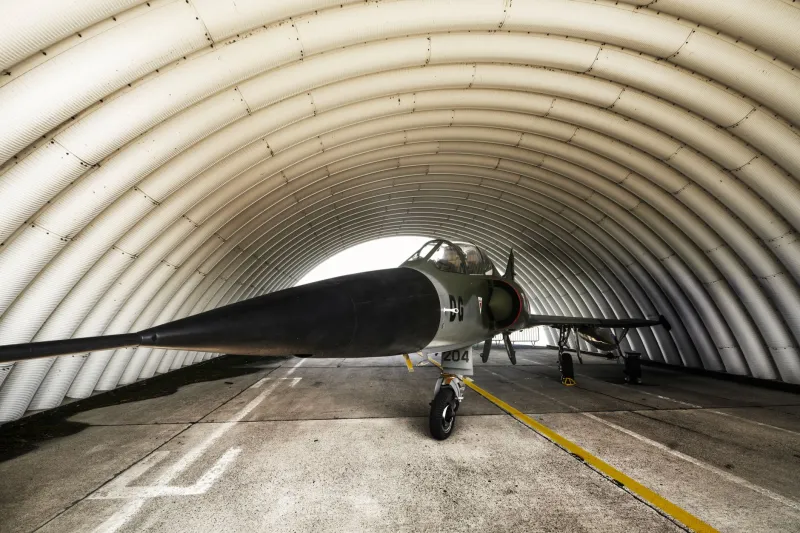
Aerial reconnaissance imagery from the 1990s documented the progressive deterioration of Iraqi aircraft shelters and the aircraft parked within them. By the time coalition forces overran Iraqi air bases in 2003, they found aircraft in states of decay that went beyond deferred maintenance — they found machines that the environment had methodically dismantled. Rubber seals had perished in the heat. Hydraulic lines had cracked. Structural panels showed corrosion perforation in places that should have taken decades to reach such a condition under normal operational life.
The Iraqi Air Force's silent killer had been working long before any coalition bomb fell.
Adaptation and Innovation on the Flight Line
Coalition maintenance crews responded to the environmental challenge with a combination of procedural adaptation, improvisation, and sheer persistence. Corrosion control programs that were considered supplementary functions at home stations became primary mission activities in theater. Aircraft were washed — a labor-intensive process rarely prioritized during high-tempo operations — at compressed intervals specifically to remove salt and dust accumulation before it could initiate corrosive attack.
Engine wash procedures, which use demineralized water to flush compressor stages, were incorporated into post-flight routines at frequencies unprecedented in peacetime operations. Protective coatings were reapplied to fasteners and panel edges during phase inspections. Avionics bays were sealed with greater rigor, and desiccant packages were installed in equipment cavities to manage internal humidity.
The Air Force Materiel Command eventually developed theater-specific maintenance supplements — essentially amended technical orders that acknowledged the Iraqi environment's unique demands. These documents represented an institutional acknowledgment that the standard maintenance framework, built around operating conditions in the American Midwest or Western Europe, was insufficient for the realities of sustained operations in the Middle East.
A Legacy Written in Metal
The lessons of environmental warfare over Iraq have shaped how the United States military approaches expeditionary aviation maintenance today. Corrosion prevention and control training has been elevated within Air Force and Army aviation curricula. Aircraft coatings technology has advanced, with newer low-observable surface treatments designed to maintain integrity under thermal and particulate stress. Engine designs have incorporated improved filtration and blade coating technologies that owe part of their development lineage to the hard experience of the Iraqi theater.
But perhaps the most durable legacy is a revised appreciation for what actually keeps airpower functioning in a contested environment. Combat aviators carry the visible narrative of air warfare. The maintainers who fought the invisible enemy — the oxidizing atmosphere, the abrasive sand, the corrosive salt air — carried an equal burden, with far less recognition.
In Iraq, the sky was not the only adversary. The ground was fighting back too, one molecule of metal at a time.