Screens and Crosshairs: The Remote Pilots Who Rewrote the Rules of Aerial Combat Over Iraq
The sun had already set over Creech Air Force Base in Nevada when the mission began. Inside a ground control station no larger than a modest office, a pilot and sensor operator settled into their seats, donned headsets, and assumed command of an aircraft cruising at altitude over central Iraq — roughly 7,000 miles away. No G-forces. No cockpit canopy framing a horizon. Just a pair of screens, a throttle, and the weight of a decision that could end a life before the next commercial break aired on a television set somewhere down the hall.
This was the new face of American airpower over Iraq, and it arrived not with the thunder of afterburners, but with the quiet hum of satellite uplink equipment.
From Predator to Precedent
The MQ-1 Predator, which entered operational service in the mid-1990s, was initially conceived as a reconnaissance platform — a set of persistent, unblinking eyes above terrain too dangerous or too sensitive for manned aircraft. By the time Operation Iraqi Freedom launched in March 2003, however, the Predator had been armed with AGM-114 Hellfire missiles, transforming a surveillance tool into a precision strike asset with global reach.
The implications were profound. For the first time in the history of aerial warfare, a pilot could engage a target, observe the effects of a strike in real time, and then drive home for dinner. The physical separation between operator and battlefield was unprecedented, but the psychological and moral proximity remained absolute. Every decision carried the same consequence as if the pilot had been sitting in a cockpit over Baghdad rather than in a trailer outside Las Vegas.
The MQ-9 Reaper, which began replacing the Predator in meaningful numbers after 2007, extended that reach further still. Faster, more capable, and able to carry a substantially larger weapons payload, the Reaper became the instrument through which the U.S. Air Force and other services prosecuted high-value targets, provided close air support to ground troops, and maintained persistent surveillance over insurgent networks operating throughout Iraq's western deserts and urban centers.
The Architecture of Remote War
Understanding how these missions functioned requires an appreciation for the layered command-and-control infrastructure that made them possible. A typical Predator or Reaper mission involved a launch-and-recovery element based in theater — often at Balad Air Base or another forward location in Iraq — which handled the critical phases of takeoff and landing where satellite communication latency posed the greatest risk. Once airborne and beyond the immediate terminal environment, control was handed off via satellite link to the stateside ground control station, where the primary crew assumed command.
This handoff was seamless in design but demanding in execution. Crews trained extensively to manage the communication delay inherent in satellite relay — typically between one and two seconds — a gap that sounds trivial but becomes operationally significant when aircraft are maneuvering or weapons are in flight. Operators developed techniques to compensate, anticipating aircraft behavior rather than reacting to it, a cognitive skill set with no direct precedent in conventional aviation training.
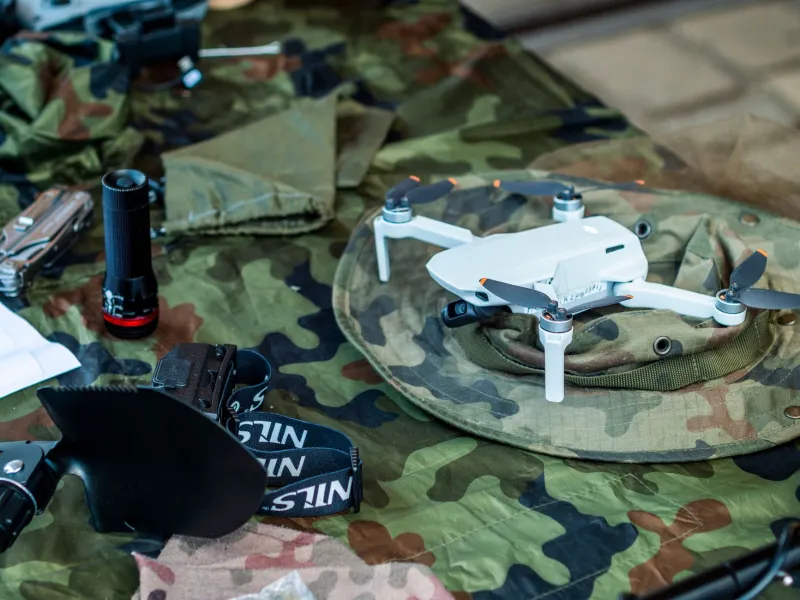
The sensor operator, often an enlisted specialist, controlled the aircraft's electro-optical and infrared cameras, laser designators, and — in coordination with the pilot — the weapons systems. Their role was not passive. In many respects, the sensor operator's ability to interpret what appeared on screen, track moving targets through cluttered urban environments, and distinguish combatants from civilians represented the most demanding cognitive work in the entire kill chain. Former operators have described the experience as akin to playing a video game in which every error carries irreversible human consequences.
The Psychology of Distance
Critics and commentators have long debated whether the physical remove of drone warfare diminishes the psychological burden on operators — whether the screen creates a moral buffer that makes lethal force easier to authorize. The accounts of those who actually flew these missions complicate that narrative considerably.
Former Air Force drone pilots have described in interviews a phenomenon sometimes called the "Reaper stare" — the experience of watching a target for hours, sometimes days, before a strike is authorized. Operators came to know their targets' routines, observed them interacting with family members, and in some cases recognized patterns of behavior that humanized individuals the intelligence community had designated for lethal action. The intimacy of persistent surveillance, paradoxically, could make the moment of weapons release more psychologically disorienting, not less.
Post-traumatic stress disorder and operational burnout emerged as genuine concerns within the remotely piloted aircraft community, particularly as the operational tempo over Iraq and Afghanistan intensified through the late 2000s and early 2010s. Unlike conventional aircrew who deployed to theater for defined rotations and then returned home to decompress, drone operators often transitioned directly from a combat mission to a base commissary, a school pickup line, or a family dinner. The absence of geographic transition made psychological decompression structurally difficult.
The Air Force eventually acknowledged these pressures and began developing support programs specifically tailored to remotely piloted aircraft crews — a recognition that the psychological demands of remote warfare were real, even if they manifested differently than those of traditional combat aviation.
Precision and Its Limits
Advocates of drone warfare over Iraq emphasized the technology's capacity for precision — the ability to loiter over a target area, positively identify the intended individual, and deliver a weapon with minimal collateral effect. In cases where these conditions were met, the results were operationally significant. High-value targets who might have survived conventional air strikes, given the response time required to vector manned aircraft, were neutralized through the persistent patience that only unmanned platforms could sustain.
Yet precision is a function of intelligence as much as technology. When the information feeding a targeting decision was flawed — when pattern-of-life analysis misidentified a civilian convoy as a militant formation, or when signals intelligence pointed to a location that had already been vacated — the consequences were catastrophic regardless of how accurately the weapon performed. Several incidents over Iraq during this period underscored that the ethical burden of drone warfare resided not in the platform itself, but in the quality of the human judgment applied to its use.
A Legacy Still Being Written
The remotely piloted aircraft operations conducted over Iraq between 2003 and the drawdown of American forces represent one of the most significant doctrinal evolutions in the history of aerial warfare. They established the operational frameworks, the legal precedents, and the institutional culture that now govern how the United States projects airpower across the globe without placing aircrew in physical jeopardy.
The men and women who flew those early missions — who learned to wage war through satellite links and infrared screens, who carried the weight of lethal decisions across thousands of miles of fiber and radio frequency — did so without the cultural recognition afforded to those who strapped into cockpits. Their contributions shaped every drone program that followed, in every theater where American airpower operates today.
The aircraft they flew never appeared in air shows. Their names never appeared on the fuselages of famous warplanes. But above Iraq, in the years when the conflict demanded persistence more than speed, they were always overhead — watching, waiting, and when the order came, acting with a precision that redefined what aerial warfare could be.