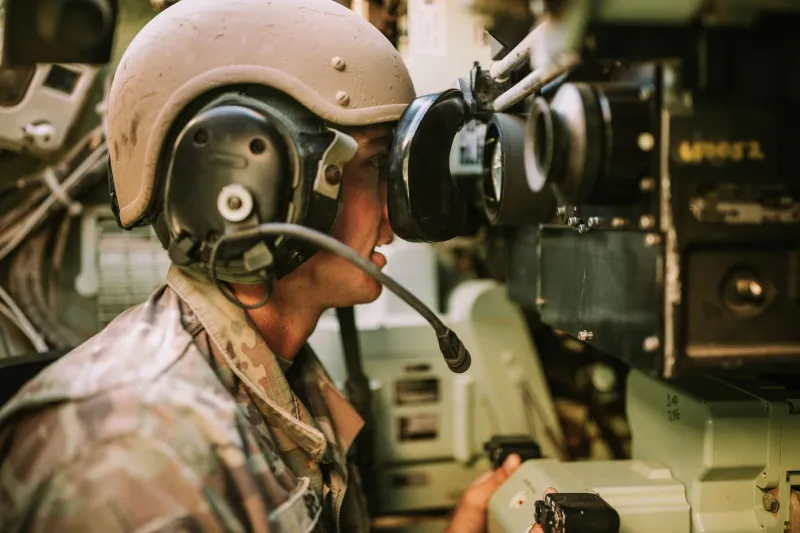
Listening for the Invisible: How Iraqi Air Defense Crews Hunted American Stealth With Human Ears
The F-117 Nighthawk was engineered to be a ghost. Its faceted fuselage scattered radar energy in directions no antenna could follow. Its engine exhaust was cooled and diffused before it ever left the airframe. On paper — and on radar — it simply did not exist. American planners built entire campaign strategies around that invisibility, confident that Iraqi air defenders staring into their scopes would find nothing but static and empty sky.
What those planners did not fully anticipate was that some Iraqi operators would eventually stop staring at their screens altogether.
When Electronics Fail, Physics Remains
Stealth technology is, at its core, a conversation with electromagnetic energy. It bends, absorbs, and redirects radar waves. But it cannot silence the fundamental physics of a 52,000-pound aircraft pushing through dense atmosphere at several hundred miles per hour. Sound, unlike radar return, is not a signal that can be shaped by geometry or absorbed by radar-dampening composites. It simply propagates.
Iraqi air defense doctrine during the Gulf War era was built around Soviet-supplied radar infrastructure — SA-2, SA-3, and SA-6 surface-to-air missile batteries linked to early warning networks stretching across the country. When coalition electronic warfare campaigns began systematically blinding those networks in the opening hours of Operation Desert Storm in January 1991, Iraqi commanders faced a stark operational reality: their most sophisticated detection tools had been neutralized. What remained were the senses their operators were born with.
Documented accounts from postwar intelligence debriefs and academic research into Iraqi air defense practices reveal that some units, particularly those stationed near Baghdad and along western approach corridors, began experimenting with acoustic monitoring as a supplementary detection layer. The methods were improvised, the equipment often crude, but the underlying logic was sound — literally.
The Architecture of Listening
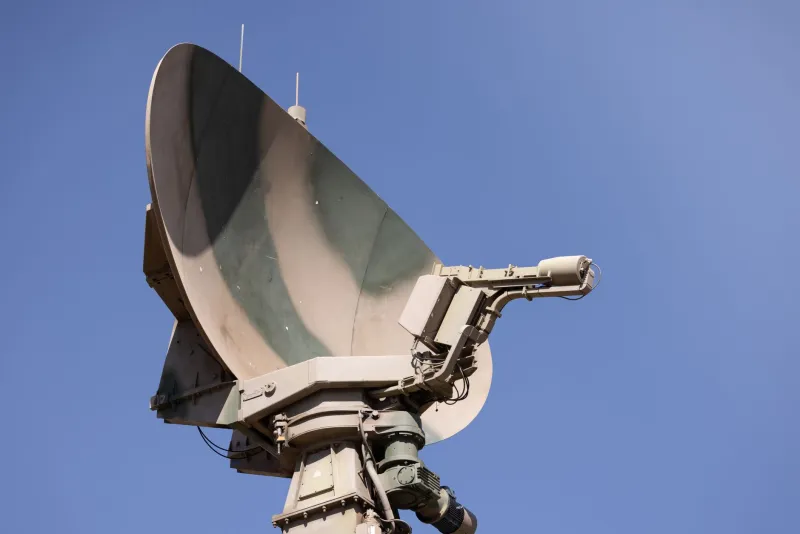
Acoustic detection of aircraft is not a new concept. During the First and Second World Wars, both Allied and Axis forces deployed large parabolic "sound mirrors" to pick up the distant drone of approaching bombers before radar became operationally reliable. The British constructed concrete acoustic installations along the southeastern coastline specifically to detect German aircraft crossing the Channel. By the time radar matured, acoustic detection had been largely abandoned as technologically obsolete.
Iraqi operators, working under the pressure of a collapsing electronic defense network, appear to have rediscovered the principle through necessity rather than doctrine. Postwar reporting and analysis from the Gulf War Air Power Survey — the comprehensive official study commissioned by the U.S. Air Force — noted with some surprise that coalition aircraft, including stealth platforms, occasionally encountered tracking behavior from Iraqi units that could not be explained by radar acquisition alone.
The approach, as reconstructed through multiple intelligence sources, involved positioning experienced listeners — often veteran operators who had spent years monitoring airspace — at elevated or acoustically favorable terrain features. These individuals were tasked with identifying the distinctive acoustic signatures of different aircraft types. A B-52 sounds nothing like an F-16. An F-117, even with its carefully managed exhaust systems, produces a recognizable low-frequency rumble at certain altitudes and throttle settings that a trained ear, working in the relative quiet of the Iraqi desert night, could potentially distinguish.
The Limits of Human Hearing
It would be an overstatement to suggest that Iraqi acoustic detection posed a decisive threat to coalition stealth operations. The method carried profound limitations that no amount of human ingenuity could fully overcome. Sound travels at roughly 767 miles per hour at sea level — fast by human standards, but agonizingly slow compared to the reaction time required to vector a surface-to-air missile onto a fast-moving target. By the time a listener confirmed an acoustic contact, triangulated an approximate bearing with adjacent posts, and relayed that information up the command chain, the aircraft in question had already moved miles from its detected position.
Furthermore, the Iraqi desert environment introduced significant acoustic interference. Wind, temperature inversions, and the ambient noise of military activity all degraded the signal-to-noise ratio that acoustic operators depended upon. On certain nights, conditions were favorable. On others, the same techniques produced nothing but frustration.
Yet the psychological and doctrinal implications of the effort were arguably more significant than its tactical results. American mission planners, upon reviewing postwar intelligence, were confronted with evidence that stealth — however advanced — had not rendered aircraft operationally invisible in every dimension. The F-117's single combat loss, the shootdown of Lieutenant Colonel Dale Zelko's aircraft over Serbia in 1999 during Operation Allied Force, would later be attributed in part to predictable flight routing and degraded radar detection methods employed by Serbian crews. The Iraqi acoustic experiments, crude as they were, pointed toward the same fundamental vulnerability: stealth defeats specific sensors, not the totality of human observation.
Analog Resistance in a Digital War
There is something almost elegiac about the image of Iraqi operators pressing their hearing into service against machines that cost hundreds of millions of dollars and represented decades of classified American engineering. It speaks to a broader pattern that has recurred throughout aerial warfare history — the tendency of technologically outmatched defenders to find asymmetric solutions in the margins of conventional doctrine.
The acoustic experiments conducted by Iraqi air defense crews during Desert Storm and throughout the subsequent years of no-fly zone enforcement represent one of the more quietly remarkable chapters of that conflict's air war. They did not change the outcome. They did not bring down stealth aircraft in meaningful numbers. But they demonstrated that determined operators, denied their primary tools, will reach for whatever remains — including the oldest detection instrument in human history.
The story of those listening posts, improvised and imperfect, deserves a place in the broader history of how Iraq's air defenders adapted to an adversary whose technological advantages were, in almost every other respect, overwhelming. In choosing to listen when they could no longer see, those operators revealed something enduring about the relationship between human ingenuity and the limits of even the most advanced military technology.
Stealth made aircraft invisible to radar. It could not make them silent.