Paris in the Crosshairs: How France Sold Iraq the Jets That Would Face Its Own Ally
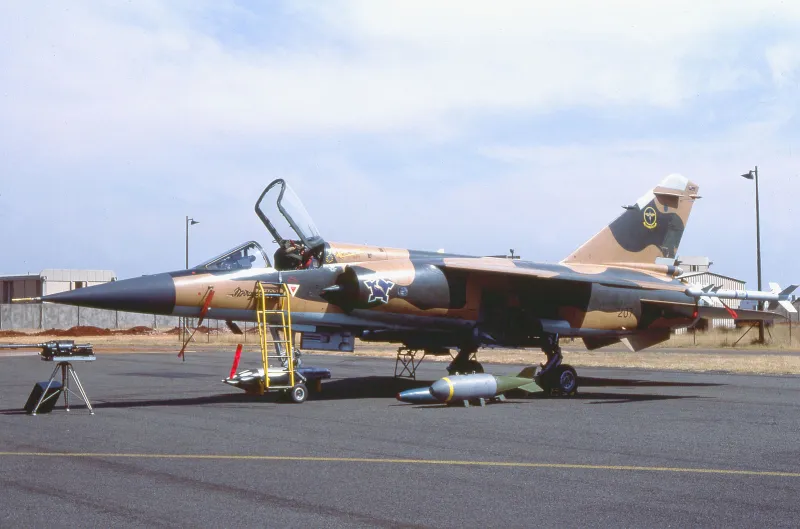
Photo: Mirage F1 fighter jet desert airbase, via theaviationist.com
A NATO Capital's Best Customer
By the early 1980s, Baghdad had become one of the most lucrative stops on the international arms circuit. Saddam Hussein's war with Iran transformed Iraq into a buyer without peer, and France — a founding member of the alliance that would later bomb his air defenses — was happy to do business. The Mirage F1, and later the more advanced Mirage 2000, flowed into Iraqi squadrons in numbers that made Paris Baghdad's second-largest Western arms supplier after the Soviet Union.
The arrangement was commercially brilliant and strategically awkward. French manufacturers received hard currency and battle-proven marketing; Iraq received Western avionics, radar, and weapons integration that no Soviet export model could match. Nobody in Paris seemed particularly troubled by the question of what happens when your best customer eventually stands on the other side of a coalition checklist.
Western Metal, Eastern Mind
The Mirage fleet's fundamental flaw was not mechanical but doctrinal. Iraqi pilots trained under Soviet methodology — centralized ground-controlled interception, rigid engagement rules, minimal pilot autonomy. The Mirage 2000 was built around exactly the opposite philosophy: a flexible, pilot-driven platform designed for NATO's decentralized fighter tradition.
The result was a mismatch that no amount of maintenance hours could repair. Iraqi Mirage crews flew some of the most capable export fighters in the world as though they were MiG-21s with better paint. The aircraft's pulse-Doppler radar and advanced look-down capability were routinely underutilized because the command structure feeding them information could not keep pace. A fighter jet, however sophisticated, is only as good as the system around it — and Iraq's system was built for a different war with different assumptions.
January 1991: The Reckoning
When Desert Storm opened, the Mirage fleet faced the air force of the country that had licensed its export. American F-15 crews, flying aircraft built on the same Western design philosophy the Mirages were denied, dispatched them with brutal efficiency. At least one Mirage F1 was reportedly shot down by an F-15 using a missile the Iraqi pilot's own training had never prepared him to counter.
A handful of Iraqi Mirage pilots flew to Iran — a familiar escape route for Saddam's aviars — where the aircraft were eventually absorbed into the Islamic Republic's inventory. Others were buried, hidden, or destroyed on their hardstands. The fleet that Paris had spent a decade cultivating evaporated in roughly forty days of combat.
What the Mirage Episode Teaches
The deeper lesson of Iraq's French fighters is not that Western equipment is fragile, nor that Soviet doctrine was doomed. It is that weapons exports create relationships and expectations that outlast the contracts. France armed a future adversary of its own principal ally, and the aircraft in question ended up in the gun cameras of American fighters.
Every major arms-exporting nation faces this tension today. The Mirage crews of the Iraqi Air Force — skilled, professional, and structurally sabotaged — remain the clearest historical demonstration that the platform is never the whole story. Doctrine, training, and the political architecture surrounding a weapons sale matter more than any radar cross-section or thrust-to-weight ratio. Baghdad's Mirages never stood a chance, but not for the reasons the brochures suggested.