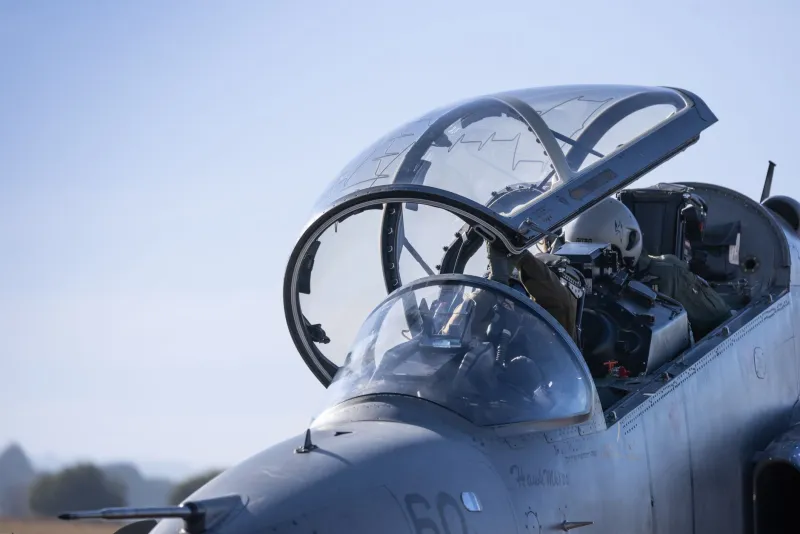
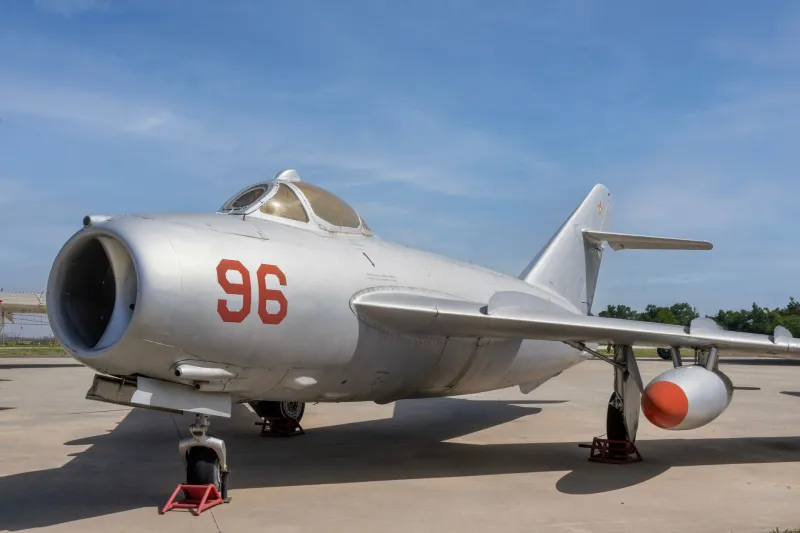
Steel and Memory: Inside the Crumbling Iraqi Aircraft Collections That History Is Racing to Save
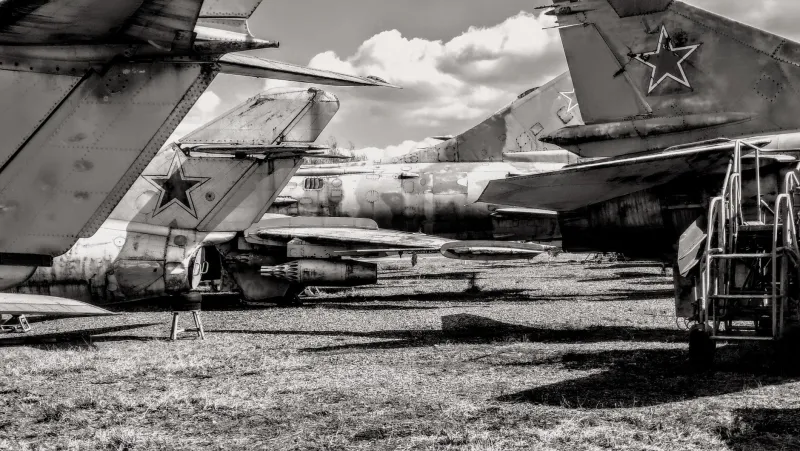
There is a particular quality of light in the Iraqi desert at midday that makes metal look ancient even when it is not. Under that light, a MiG-21 fuselage stripped of its cockpit canopy and half-buried in wind-driven sand does not look like a weapons system. It looks like an artifact—something unearthed rather than abandoned, belonging more to archaeology than to military history. That impression, it turns out, is not entirely wrong.
Iraq's pre-war air force was, at its peak in the mid-1980s, one of the most formidable in the Middle East. Equipped with Soviet, French, and Chinese aircraft, trained by a generation of pilots who had accumulated real combat experience during the Iran-Iraq War, and supported by an infrastructure that included hardened shelters, dispersal airfields, and an elaborate command network, the Iraqi Air Force represented a serious regional capability. What happened to that force—how it was built, how it was broken, and what physical traces it left behind—is a question that a small but determined community of researchers, preservationists, and veterans is working urgently to answer before the evidence disappears entirely.
The Graveyards
The most visible remnants of Iraqi air power are the aircraft themselves, or what remains of them. Following the 1991 Gulf War and the 2003 invasion, significant numbers of Iraqi military aircraft were destroyed in place, captured, or simply abandoned on airfields that subsequently fell into disuse. Some were deliberately disabled by coalition forces. Others were stripped by looters seeking salvageable metal and components. A portion ended up in a state of suspended decay—too damaged to fly, too large to easily remove, and too historically significant to ignore entirely.
Several former Iraqi air bases contain what amount to open-air aircraft graveyards. Al-Taqaddum, Balad, and Shaibah have all been documented by researchers who visited in the years following 2003 and found significant numbers of aircraft in various states of deterioration. The inventory included MiG-21 and MiG-23 fighters, Su-22 and Su-25 ground attack aircraft, Mi-8 and Mi-24 helicopters, and a scattering of Aero L-29 and L-39 trainers that formed the backbone of Iraqi pilot education for decades.
The condition of these aircraft at the time of documentation ranged from surprisingly intact to barely recognizable. Some had clearly been the subject of deliberate post-war destruction—cockpits smashed, engines removed, airframes punctured. Others appeared to have simply been parked and forgotten, their deterioration the product of time, climate, and neglect rather than deliberate action.
What the Machines Remember
For aviation historians, the significance of these aircraft extends well beyond their value as hardware. Each airframe carries a record of its operational history in ways that are legible to trained observers: maintenance patches, weapons pylons modified for non-standard munitions, cockpit instrumentation that reveals which avionics packages were fitted and when. Several researchers who examined Iraqi aircraft in the post-2003 period reported finding maintenance logs and technical documents still present in some cockpits—paperwork that, in better circumstances, would represent invaluable primary source material.
Retired U.S. Air Force intelligence officer James Whitfield, who spent time at several former Iraqi air bases in 2003 and 2004 as part of post-conflict assessment work, described the experience of walking through the aircraft storage areas as genuinely strange. "You had these machines that we'd spent years studying from satellite imagery and signals intelligence," he recalled in an interview conducted for an academic oral history project. "And suddenly you could just walk up and look at them. Read the stenciling on the access panels. See where someone had painted over a unit marking. It was like reading a document you'd only ever seen described."
That documentary value was recognized early by some researchers, but the security environment in post-2003 Iraq made systematic preservation work extremely difficult. Several early efforts to photograph and catalog surviving aircraft were interrupted by deteriorating conditions on the ground. By the time the security situation stabilized sufficiently to permit more organized work, a significant portion of the most accessible aircraft had been further degraded or removed.
The Museum Question
Iraq does maintain a small number of formal aviation collections, though their condition and accessibility have varied considerably with the country's political circumstances. The Iraqi Air Force Museum in Baghdad, established during the Baathist period to celebrate the service's history and achievements, housed a curated selection of aircraft and artifacts that represented the official narrative of Iraqi air power. That collection suffered significant damage and looting in 2003 and has been the subject of intermittent restoration efforts since.
Curators working with the collection in the years following the invasion described a situation that was simultaneously heartbreaking and historically revealing. Artifacts that had been carefully preserved under the previous government—uniforms, flight equipment, documentation, scale models, and personal effects belonging to notable pilots—were scattered or destroyed. What remained required careful sorting to distinguish items of genuine historical significance from more recent additions of lesser provenance.
Some of the most interesting preservation work has taken place outside formal institutional settings. A number of Iraqi aviation veterans and their families have maintained private collections of photographs, documents, and personal equipment that document careers and operations that appear nowhere in official records. These informal archives, assembled over decades of service, represent a form of grassroots historical preservation that researchers have found invaluable—particularly for understanding the human dimensions of the Iraqi Air Force's history.
Racing the Clock
The urgency of preservation efforts is difficult to overstate. The physical aircraft that remain in Iraqi airfields and storage areas are subject to continuous deterioration from a climate that is deeply hostile to metal and rubber. The veterans who flew and maintained those aircraft are aging. Documents that were not secured in the chaotic period following the 2003 invasion are unlikely to surface now. Every year that passes without systematic documentation effort represents a permanent loss.
Some American aviation historians and veterans' organizations have expressed interest in supporting Iraqi preservation efforts, recognizing that the history of the Iraqi Air Force is inextricably linked with the history of American air power in the region. Understanding how Iraqi pilots were trained, how their aircraft were maintained, and how their force was structured and employed is not merely an exercise in foreign military history—it is essential context for understanding the campaigns that American aviators flew against them.
What remains of Iraq's air force is fragmentary, weathered, and contested. But it is also irreplaceable. The MiGs rusting in the desert, the logbooks moldering in forgotten filing cabinets, the photographs that veterans keep in shoeboxes—these are not merely relics of a defeated military. They are the physical evidence of an aerial history that shaped the modern Middle East, and that continues to inform how American air power understands its own past. The clock is running. The question is whether anyone will act before the desert finishes its work.