Thunder as a Weapon: The Deliberate Use of Sonic Dominance in America's Air Campaigns Over Iraq
There is a moment, well documented in the accounts of Iraqi soldiers who surrendered during Desert Storm, that recurs with striking consistency. Before the artillery, before the ground assault, before any direct contact with coalition forces, there was the sound. A low, building pressure against the chest. Then the roar — not from one direction but from everywhere at once — of American combat aircraft operating at low altitude and high speed over the Kuwaiti theater. Several prisoners of war described it not as noise but as a physical presence, something that entered the body and refused to leave.
That experience was not accidental.
Designing the Roar
American airpower planners have long understood that psychological effect and kinetic effect are not separate categories. The two operate in tandem, and in some circumstances the psychological dimension arrives first and lingers longest. During the planning phases of Operation Desert Storm, Air Force targeting teams working under the broader framework of the air campaign — later examined in detail by Gulf War air power survey teams — identified Iraqi command infrastructure, air defense networks, and fielded forces as primary targets. But embedded within those discussions was a parallel conversation about what airpower looked and, critically, sounded like to those on the receiving end.
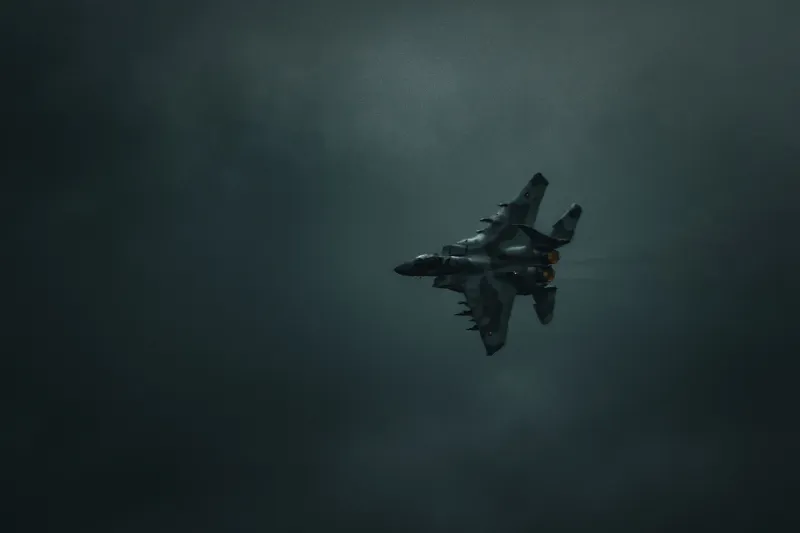
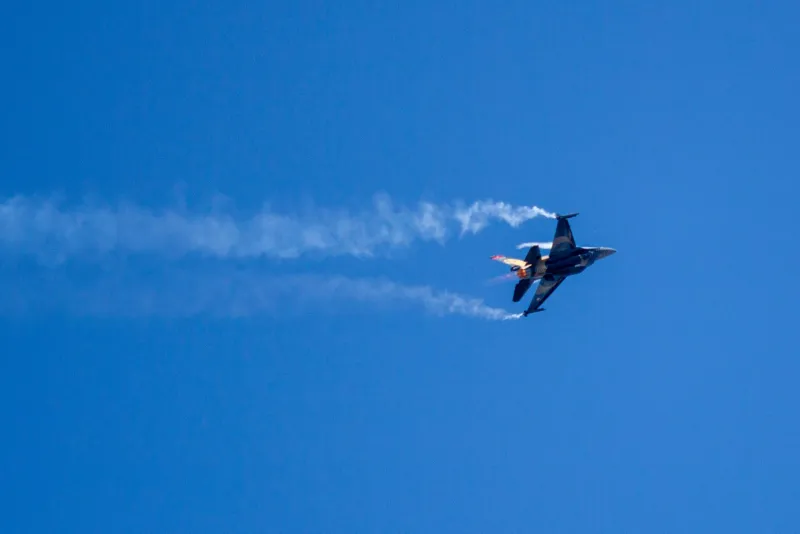
Low-level flight profiles flown by A-10 Thunderbolts and F-16 Fighting Falcons over Iraqi forward positions were not always the most efficient delivery method for ordnance. At lower altitudes, aircraft became more vulnerable to small arms and short-range surface-to-air threats. Yet planners accepted that tradeoff in specific contexts because the psychological return — the shattering roar of a jet at treetop level, the sense of total exposure, the inability to track or predict the aircraft's next appearance — was itself a combat multiplier.
Declassified after-action reports from the 1991 campaign note that Iraqi unit cohesion degraded measurably in sectors subjected to sustained low-level air activity, even in periods when no ordnance was delivered. The sound alone was enough to suppress movement, disrupt communications, and erode the confidence of officers trying to maintain discipline among conscript forces already stretched thin by months of occupation duty.
The Sonic Boom as a Psychological Instrument
Supersonic flight over populated and contested areas carries a signature that no amount of habituation fully neutralizes. The sonic boom — that sharp, percussive crack that rolls across terrain like a physical wave — registers in the human nervous system as an explosion. The distinction between a sonic boom and a nearby detonation is cognitive, not instinctive. For populations and military personnel who had already experienced actual bombing, the ambiguity was deliberate and operationally useful.
During the years of the no-fly zone enforcement operations — both Northern Watch and Southern Watch, which ran from 1991 through 2003 — American and coalition aircraft routinely exceeded the speed of sound over Iraqi territory. Official statements characterized these as standard patrol profiles. But retired aircrew who flew those missions have noted in interviews and memoirs that supersonic passes were sometimes timed and routed to maximize their ground effect: over known Republican Guard installations, near command facilities, along corridors where Iraqi air defense crews were known to be active.
The message was consistent and unambiguous. We are here. We are fast. We are beyond your reach.
Voices from the Ground
Archived interviews conducted by military historians and journalists in the years following Desert Storm and the 2003 invasion offer a ground-level perspective that targeting documents cannot fully capture. Iraqi civilians living near military installations described the years of no-fly zone enforcement as a sustained psychological siege. The aircraft were rarely visible. They were always audible.
One account, preserved in a University of Michigan oral history project focused on Iraqi diaspora communities, describes a woman in Basra who kept a radio playing at all hours not for entertainment but to provide some auditory baseline against which the sound of approaching jets could be measured. Her family had developed an informal taxonomy of sounds: the distant rumble of high-altitude tankers and surveillance aircraft, the sharper note of fighters on patrol, and the entirely different register of aircraft descending and accelerating — the sound, as she described it, that meant something was about to happen.
That kind of constant acoustic vigilance is itself a form of psychological attrition. It consumes attention, disrupts sleep, and maintains a population in a state of low-grade anticipatory dread that, over years, becomes normalized but never truly neutral.
The B-52 Effect
No aircraft in the American inventory produced quite the same psychological signature as the B-52 Stratofortress operating at high altitude with a full bomb load. The aircraft itself was often invisible, a contrail at the edge of perception. The sound — a deep, resonant thrumming that built slowly and then passed — carried an almost abstract quality of inevitability.
During Desert Storm, B-52s flew arc light-style missions against Iraqi troop concentrations in Kuwait and southern Iraq. The effect on morale was so pronounced that it became a specific subject of post-war analysis. Coalition psychological operations teams distributed leaflets that included silhouettes of the B-52 and text warning that the aircraft was coming. The leaflets were not misleading. They were calibrated to ensure that when Iraqi soldiers heard that particular sound overhead, they already knew what it meant and had been given time to contemplate it.
Subsequent interviews with Iraqi prisoners confirmed that the B-52 had acquired a mythological status among Iraqi ground forces long before the war began — a product of both its World War II and Vietnam legacy and the sustained information operations that coalition forces had conducted in the months preceding the ground campaign.
Acoustic Power in the Modern Battlespace
The deliberate use of aircraft noise as a psychological instrument did not end with Desert Storm. During Operation Iraqi Freedom in 2003, the opening hours of the air campaign included supersonic passes over Baghdad that preceded the first wave of strikes. Eyewitness accounts from journalists embedded in the city describe a city that went silent before the bombs fell — not from calm but from the paralysis that comes from hearing something vast and fast moving overhead and not knowing where it intends to land.
The concept of effects-based operations, which shaped much of the planning for Iraqi Freedom, explicitly incorporated non-kinetic effects alongside kinetic ones. Sound, visibility, the sheer operational tempo of aircraft cycling through airspace at a rate no adversary could match — these were understood as tools in a broader campaign to disaggregate enemy will from enemy capability.
A Legacy Written in Decibels
The history of American airpower over Iraq is typically measured in sorties flown, targets destroyed, and objectives achieved. Those metrics are real and important. But they capture only the visible surface of what air campaigns actually accomplish. Beneath the statistics is a sustained, deliberate, and often underexamined effort to use the sound and presence of airpower as a weapon in its own right.
For the pilots who flew those missions, the roar of their engines was simply a byproduct of doing their jobs. For the planners who designed the flight profiles, it was a calculated effect. And for the people on the ground — soldier and civilian alike — it was the voice of a dominance that arrived long before the weapons did and remained long after the aircraft returned to base.
The sky over Iraq was never quiet. That was not an accident.